
The Horn does not reward a “see everything†sprint. Highlands sit above 2,000 meters. The Danakil sits below sea level and cooks. Roads that look short on a map can eat half a day. Djibouti and Somaliland sit next door with their own visas, heat, and pacing rules.
This hub is the map for trips I’ve already written up from the ground: Ethiopia planning basics, a Danakil Depression tour, Harar’s walled city, accessible Tigray churches, plus Djibouti and Somaliland when you want to stitch the region. Use it to pick a season and a trip shape. Then jump into the linked guides for the day-by-day detail.
At a glance
- Best overall window for most Ethiopia circuits: October to March (dry highland weather)
- Danakil sweet spot: November to February (still hot; less punishing than spring)
- Djibouti whale sharks: roughly November to February in the Gulf of Tadjoura
- Signature pieces covered here: highland history loop · Danakil (Dallol + Erta Ale) · Harar · accessible Tigray churches · Djibouti lakes/coast · Somaliland (Hargeisa, Laas Geel, Berbera)
- What breaks schedules: rough roads, domestic flight timing, heat fatigue, permit/escort days on remote borders
- Planning rule of thumb: treat “optimistic drive time†as fiction, build a buffer day every few hard days, and do not stack Danakil heat on top of a highland sprint with zero recovery
- Who thrives: travelers who like logistics, cultural depth, and uneven comfort more than polished resort itineraries
Who this guide is for
- Planners who want season, access, and heat reality before booking Ethiopia or a Horn add-on
- Solo or small-group travelers who care where sleep actually happens after a long bus or 4WD day
- Anyone stitching Danakil, Harar, Tigray churches, Djibouti, or Somaliland into one regional story instead of three disconnected tickets
If you want five UNESCO sites in four days with soft sheets every night, this page will annoy you. If you want the map to feel honest under your boots, stay.
Best time to go
Season is not a vibe here. It decides whether the road is mud, whether Danakil is merely brutal or actively hostile, and whether Djibouti’s whale sharks are even in the water.
Dry highland window (roughly October to March)
This is the default for Lalibela-style circuits, Harar, and most Tigray church days. Cooler nights in the highlands. Clearer trails. Crowds rise around festivals, but you can still find quiet if you leave early.
Festivals worth knowing: Timkat (Epiphany, January) and Meskel (Finding of the True Cross, September). Plan lodging early if you aim for either.
Danakil timing
The depression is hot year-round. November to February is the window most people tolerate. March to June can push past 45°C. July to October brings rain that can shut tracks. Treat “cooler months†as relative, not comfortable.
Djibouti cool season (November to February)
Best overlap with whale sharks and less murderous inland heat around Lake Assal and Lake Abbe. Summer inland is a special kind of miserable.
Rainy highland months (roughly June to September)
Green landscapes, harder roads, mud on church approaches. Possible if you accept delays. Not my first pick for a first Horn trip.
Practical take: one well-timed dry-season Ethiopia core, with Danakil or Djibouti only if your body and buffer days can absorb the heat, beats a heroic itinerary that leaves you cooked and behind schedule.
How to get around
Flying in and around Ethiopia
Most people land in Addis Ababa. An e-visa before you fly is usually the least stressful option; visa on arrival still exists for many nationalities, but rules shift, so check before you book. Domestic Ethiopian Airlines flights stitch the big pieces (Lalibela, Gondar/Bahir Dar area, Mekele for Danakil/Tigray, Dire Dawa for Harar). If you flew international with them, ask about domestic fare discounts.
Buses, minibuses, private drivers
Cheap and slow on buses. Fine for some legs if you have patience and soft expectations. For Danakil, Omo-style remote travel, and most Djibouti desert days, you are in tour or private-driver territory. Factor long hours and rough surfaces into every “short†hop.
Harar access
Fly Addis to Dire Dawa, then about 1.5 hours by road to Harar. Overnight buses from Addis run roughly 10-12 hours. A private car lets you stop in places like Awash if that fits your pace.
Danakil reality
Independent travel into the depression is not allowed. Tours leave from Mekele with permits, supplies, and (where required) security escorts. You camp raw. You do not freestyle this one.
Crossing into Somaliland or Djibouti
Somaliland visas are commonly arranged in Addis (representative office) or Djibouti; land entry via Wajaale from Ethiopia is a classic route once the visa is stamped. Djibouti is often easier by air into Djibouti City, then driver-based day trips. Do not treat “Somalia†and “Somaliland†as interchangeable paperwork.
Pacing
Altitude hits some people in Addis and the northern highlands. Heat hits everyone in Danakil and much of Djibouti. I would rather waste a half-day drinking coffee in a small town than arrive after dark arguing with my own itinerary.
Key places & routes (with guides already on the site)
Ethiopia baseline: visas, money, food, etiquette
Start here if you have not traveled the country before. Cash matters outside Addis. ATMs flake. Modest dress at churches. Injera will become a personality trait whether you like it or not.
- Ethiopia travel tips: what to know before you go, visas, seasons, money, getting around, health notes, packing, and a sample two-week shape
Danakil Depression: Dallol, salt flats, Erta Ale
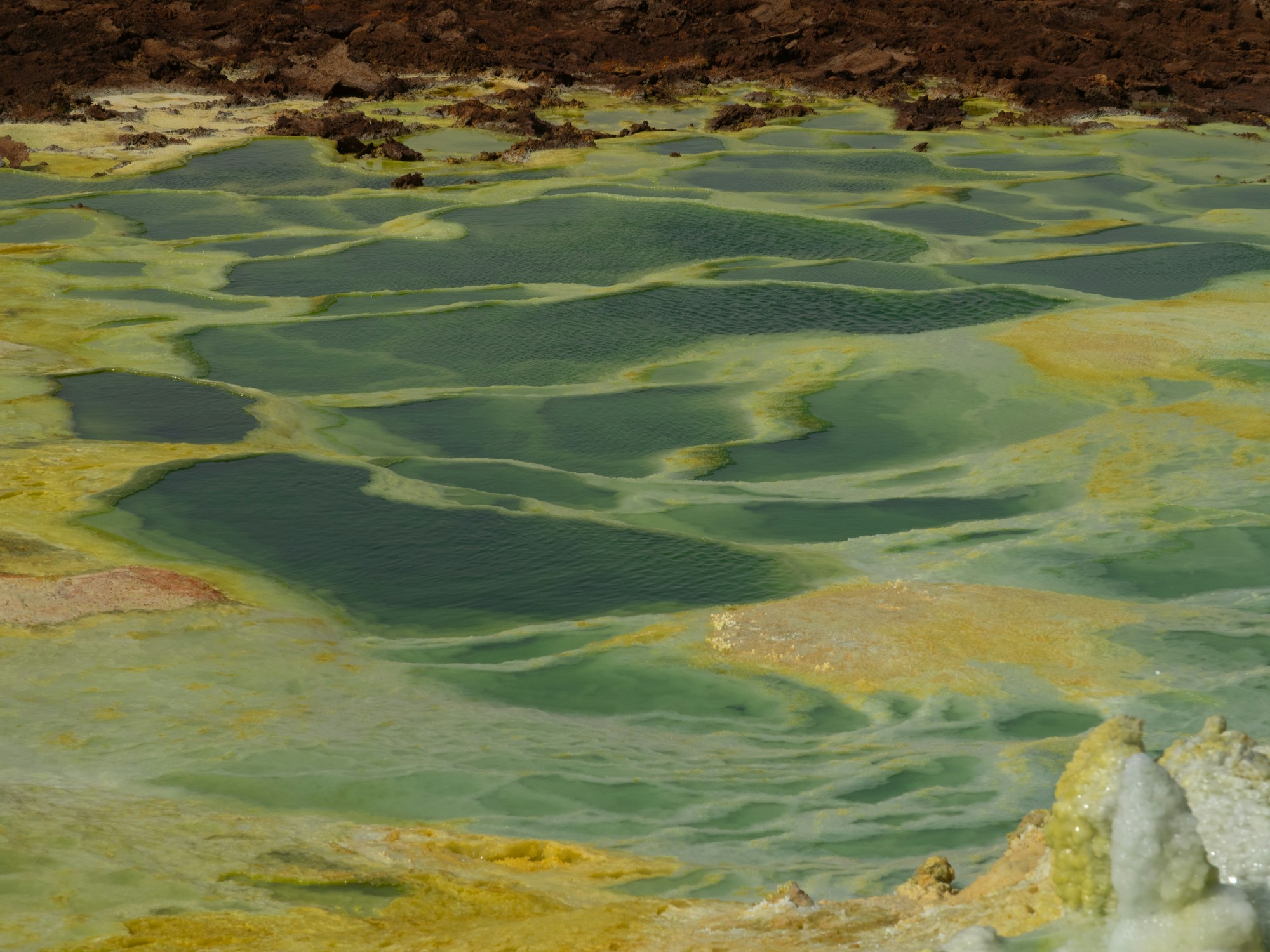
Northeastern Ethiopia, Afar country, gateway usually Mekele. Neon hydrothermal ground at Dallol. Camel salt caravans. Optional night hike to Erta Ale’s lava lake. Tours run about 2 days (Dallol focus) to 3-4 days (add Erta Ale). Budget ballpark from the tour post: roughly $250-$350 (2-day) up to about $450-$600 (4-day), often including transport, food, permits, guides, security, and camping gear. Tips and snacks sit outside that.
- Danakil Depression tour: everything you need to know, tour lengths, costs, packing for extreme heat, safety, what camping actually looks like
Harar: walled city, markets, hyenas
Eastern Ethiopia’s Jugol is a UNESCO maze of alleys, mosques, spice markets, and coffee culture. The nightly hyena feeding is as strange as it sounds. Give it two or three nights if you can; one night turns it into a checklist sprint.
- Harar Ethiopia: exploring the walled city of saints, getting there via Dire Dawa, what to see, hyena feeding, when to go
Tigray churches without the death-wish climb
Not every rock church requires barefoot cliff drama. Wukro Chirkos, Abreha we Atsbeha, and a handful of others near Wukro and Hawzien work for travelers who want the history and frescoes without technical climbing. Local guides, entry fees, shoes off, modest dress. Dry season makes the logistics kinder.
Mekele sits in the same broad northern story as Danakil, so check current access and conditions before you lock flights. Plans change in this part of the country.
- Accessible Tigray churches: cliffside treasures without the extreme climbs, easiest churches, how visits work, a simple multi-day shape
Djibouti: salt lakes, lava, whale sharks
Small country, outsized geology. Lake Assal (Africa’s lowest point), surreal Lake Abbe chimneys, Ardoukoba lava fields, diving in the Gulf of Tadjoura. November-February brings whale shark snorkeling near Arta. Expect higher prices than Ethiopia and rough roads to the remote lakes. A week is plenty for most first visits.
- Djibouti travel guide, Lake Assal, Lake Abbe, whale sharks, diving, practical tips, a sample week
Somaliland: Hargeisa, Laas Geel, Berbera
Self-governed, not widely recognized, generally more stable for visitors than southern Somalia headlines suggest. Visas, possible escorts outside cities, modest dress, no alcohol. Laas Geel’s ancient rock art is the usual highlight. Berbera adds coast after Hargeisa’s chaos. Rough roads, thin tourist infrastructure, high curiosity value.
- Somaliland travel guide, visas, safety context, Hargeisa, Laas Geel, Berbera, logistics
Sample ways to stitch a trip
These are shapes, not sacred itineraries. Borrow the structure, then change it to suit your pace and what is open when you go.
A. Classic Ethiopia core · about 10-14 days Addis → Lalibela → Simien or Gondar / Lake Tana → optional south (Omo) or east (Harar). Use the Ethiopia travel tips itinerary as a skeleton, then cut ruthlessly. Domestic flights save sanity.
B. Heat + geology · Danakil add-on · 3-4 tour days plus buffers Fly or bus to Mekele, do a 3- or 4-day Danakil Depression tour (Dallol + Erta Ale), then recover somewhere with a real shower before you stack another hard leg. Do not treat the night after Erta Ale as a “light travel day.â€
C. East Ethiopia · Harar focus · 3-4 days from Addis Addis → Dire Dawa flight → Harar for the walls, markets, coffee, hyenas → back. Easy to bolt onto a longer northern circuit if you have the flights.
D. Northern churches, paced · multi-day from Wukro / Hawzien Base near Wukro or Hawzien and walk the accessible Tigray churches that match your knees and nerve. Skip Abuna Yemata Guh unless you genuinely want the climb.
E. Horn neighbors · Djibouti week or Somaliland week Djibouti: city → Lake Assal / Ardoukoba → Tadjoura or Arta for water → overnight toward Lake Abbe if the desert drive fits. Somaliland: Hargeisa → Laas Geel → Berbera → Sheikh Mountains return. Read Djibouti or Somaliland before you romanticize “just popping over the border.â€
Mix freely. The point of a hub is options with judgment.
Packing & logistics
Full packing notes live inside the Ethiopia tips and Danakil posts. Mindset for this hub:
- Light layers for highland mornings and lowland afternoons (the temperature swing is the whole joke)
- Scarf or shawl for churches and conservative towns
- Broken-in walking shoes for uneven stone and long market days
- Serious sun kit for Danakil and Djibouti: hat, SPF, sunglasses, more water than feels polite
- Headlamp (Erta Ale night hike; also power cuts)
- Power bank; outages are normal
- Small bills for tips, church fees, taxis, markets
- Wet wipes and sanitizer when showers disappear for a few days
- Permission to book a real room after a brutal heat or gravel stretch (one comfort note: if you run hot when a vehicle turns into a greenhouse, or you are traveling at midlife and sleep is non-negotiable, plan easy on/off layers and do not stack your hardest days back to back)
- Travel insurance that treats remote tours as real, not theoretical
Cash when you can. Shade when you can. Heat stroke does not care that your itinerary looked tidy in a spreadsheet.
FAQ
How many days do I need for Ethiopia?
A focused northern or mixed circuit needs roughly 10-14 days if you use domestic flights. Add 3-4 days for Danakil, or a separate eastern block for Harar. Trying to do Danakil, Harar, Simiens, and Omo in ten days is how people remember airports, not places. Details: Ethiopia travel tips.
Is the Danakil Depression safe / can I go alone?
Only with an organized tour. Permits, guides, and escorts exist for reasons. Independent travel is not allowed. Read Danakil Depression tour before you decide if the discomfort is your kind of memorable.
Do I need to be fit for Danakil?
Moderate fitness is enough for most people. The Erta Ale night hike (about 3-4 hours) is the main physical ask. Heat management matters more than gym numbers.
Is Harar worth the detour from the northern circuit?
Yes if you like cities with texture: alleys, markets, coffee, a hyena tradition that still feels slightly unreal. No if you only have three free days and have not yet seen Lalibela. Guide: Harar Ethiopia.
Can I see Tigray churches without climbing cliffs?
Yes. Several near Wukro and Hawzien need only short walks or almost none. Start with accessible Tigray churches. Always check current regional access before booking.
Is Somaliland the same as Somalia for travel planning?
No. Different visa process, different on-the-ground reality for most visitors, different currency (Somaliland shilling; USD widely used). Start with Somaliland travel.
When should I add Djibouti?
When you want salt lakes, lava, and (in season) whale sharks, and you can absorb higher costs and heat. November-February is the kinder window. See Djibouti travel.
Solo traveler: is the Horn reckless?
Not if you plan for the tired version of yourself at 9 p.m., not only the brave version at breakfast. Use reputable Danakil operators, keep copies of documents, dress for local norms, and tell someone your check-in rhythm on remote legs.
Next step
Pick a season and a trip shape. Open the matching spoke, whether that is Ethiopia travel tips, Danakil, Harar, Tigray churches, Djibouti, or Somaliland, and build from there. I’ll keep adding routes as I cover more ground; for now, these are the pieces already written up from the road.
Related guide hubs
Start with the regional guide that matches your route, then use these hubs to plan the wider journey.
