
Norway is long. Oslo to Tromsø is more than 1,600 km by road, and the scenery most people come for sits at the two far ends: fjords in the west, Lofoten and the aurora belt in the north. A lot of first trips go wrong right here. People try to fit the whole country into one week and lose half their days to transit.
This guide splits Norway into five regions, with specific stops in each and realistic travel times between them. After that come the best months for different goals, an itinerary that doesn’t rush, and the transport and money questions that end up shaping most trips. Prices, timetables and pass rules change every season, so treat every number here as a ballpark and check it before you book.
Norway at a glance
- Currency: Norwegian krone (NOK), roughly 9.5 to 10 to the US dollar in late 2026. Cards and phone payments work almost everywhere, and some places are fully cashless.
- Language: Norwegian. English is excellent nearly everywhere you’ll travel.
- Getting around: trains in the south, domestic flights to the north, ferries on the coast, and a car for the fjords and Lofoten.
- Trip length: 7 days covers Oslo plus one region. With 10 to 14 days you can add the north.
The regions, one at a time
Oslo: museums, waterfront and an easy first base
Oslo is compact and walkable, with a good metro and harbor ferries. Two or three nights is plenty.
- The Opera House and the harbor. The Opera House has a sloping roof you can walk up for free. From there the harbor promenade runs to the Munch Museum, home to versions of *The Scream*, and on to Aker Brygge.
- Vigeland Park. More than 200 sculptures by Gustav Vigeland inside Frogner Park, free and open around the clock. Early mornings are quietest.
- Bygdøy. The peninsula is a short summer ferry ride away, or a bus ride year-round. It has the Fram Museum, the Kon-Tiki Museum and the Norwegian Folk Museum. Note that the Viking Ship Museum here closed in 2021. It’s being rebuilt as the Museum of the Viking Age, with opening currently targeted for late 2027.
The fjords: Flåm, Nærøyfjord, Geiranger and Lysefjord
“The fjords” covers hundreds of kilometers of coastline. Choose one area to focus on.
- Flåm and Nærøyfjord. This is the easiest pairing if you don’t have a car. The Flåm Railway drops about 865 meters from Myrdal, a stop on the Oslo� Bergen line, down to Flåm in roughly an hour. From Flåm, boats sail the narrow, UNESCO-listed Nærøyfjord to Gudvangen, where buses connect to Voss and trains to Bergen. You can buy the whole circuit as “Norway in a Nutshell” or book each leg yourself.
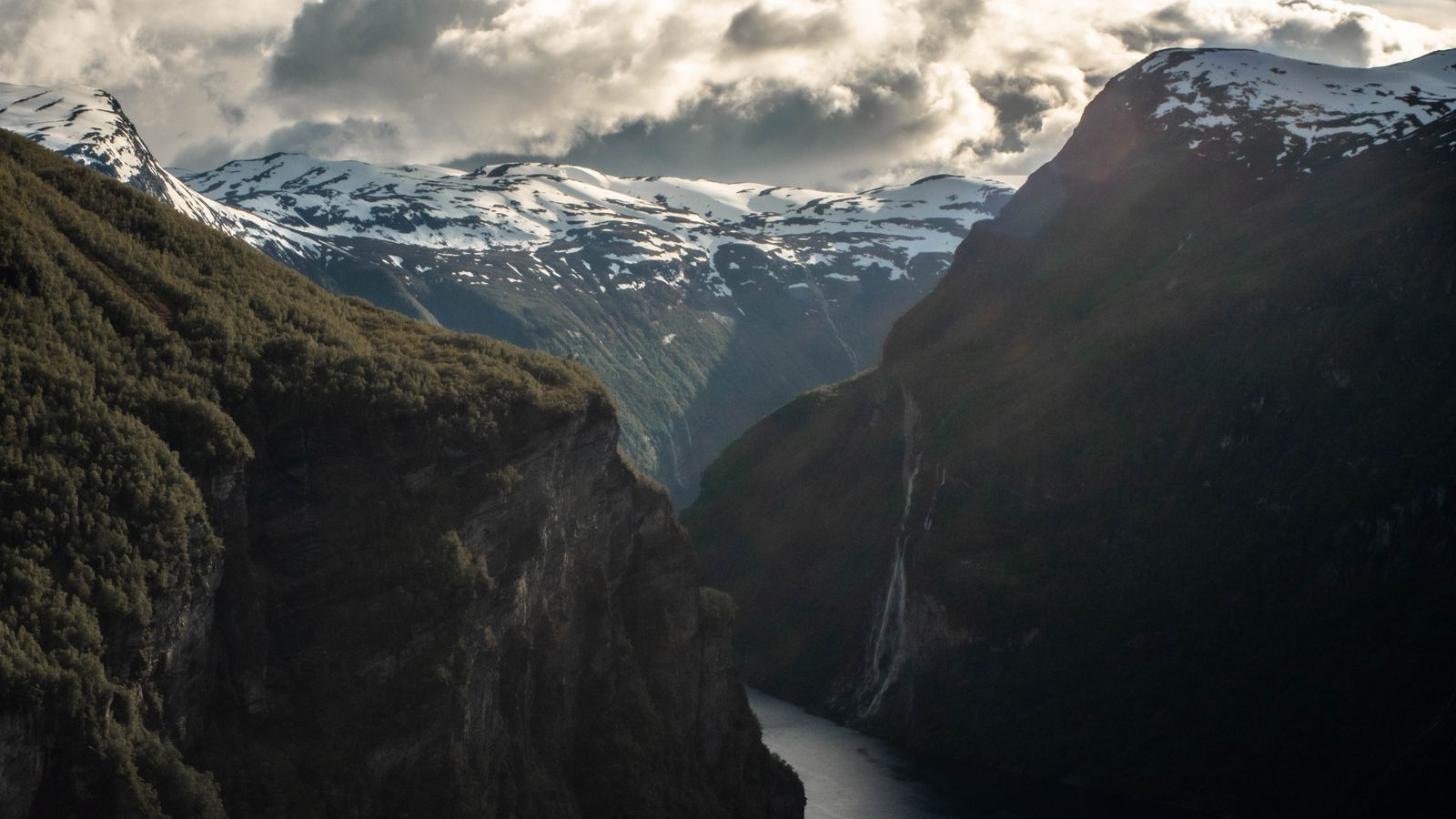
- Geiranger and �&lesund. Geiranger is the postcard fjord, with sheer walls, the Seven Sisters waterfall, and the Flydalsjuvet and Dalsnibba viewpoints. It works best with a car. The Art Nouveau town of �&lesund makes a good base about 2.5 to 3 hours away, including a ferry. The Trollstigen mountain road heads north from the area in summer and closes from autumn to late spring.
- Stavanger and Lysefjord. Preikestolen (Pulpit Rock) is a flat cliff top about 600 meters above Lysefjord. Expect roughly 8 km round trip and about four hours on rocky, uneven trail. Old Stavanger’s white wooden lanes make a gentle next day.
Hub times: Oslo to Flåm by train via Myrdal takes about 6 hours with the change. Bergen to Flåm is 2.5 to 3 hours. Bergen to Geiranger by road takes most of a day, often 7 to 8 hours with ferries.
Bergen: the gateway city
Bergen is wet, with an often-quoted figure of more than 200 rainy days a year. Pack a real shell and go anyway.
- Bryggen. This row of wooden Hanseatic warehouses is a UNESCO World Heritage site. The narrow passages behind the front facades are quieter than the harbor side.
- Fløibanen to Mount Fløyen. The funicular gives you the classic harbor view in minutes. If your legs feel good, walk down through the forest. If they don’t, ride both ways.
- Ulriken and a short fjord cruise. The Ulriken cable car goes higher than Fløyen. Half-day boat trips to Mostraumen give you a fjord without leaving town.
Getting there: The Bergen Line from Oslo takes about 7 hours and crosses the treeless Hardangervidda plateau. It’s one of Europe’s great rail days. Flights take under an hour, so a common plan is train one way and plane the other.
Lofoten: worth the extra planning
Lofoten’s granite peaks rise straight from the sea, and the E10 road links the islands by bridge and tunnel. This is where poor planning costs the most. Summer rooms in Reine and Hamnøy book up early, and popular trailhead parking fills by mid-morning.
- Reine, Hamnøy and �&. Expect red rorbu cabins on stilts, cod-drying racks and mountain walls everywhere you look. The view from Hamnøy bridge takes no effort at all. Reinebringen, the famous viewpoint above Reine, is a steep stone staircase of more than 1,500 steps. The distance is short, but it’s tough on knees and a bad idea in ice.
- Henningsvær and Nusfjord. Henningsvær has galleries, cafés and its football pitch built on the rocks. Nusfjord is one of the best-preserved fishing villages on the islands.
- Haukland and Uttakleiv. These are two white-sand beaches linked by an easy, flat walking road. In June and July people gather here for the midnight sun.
Getting there: Flights run via Bodø to Leknes or Svolvær. There’s also the Bodø� Moskenes car ferry, about 3 hours 15 minutes. If you’re driving in summer, reserve ferry space, because only part of each sailing can be booked ahead. Evenes airport is about 3 hours’ drive from Svolvær. Svolvær to Reine takes roughly 2 hours. Oslo to Bodø is about 90 minutes by air, or a full day and night by rail via Trondheim. If you take the train, Trondheim’s Nidaros Cathedral and old Bakklandet quarter justify a stop.
Tromsø: Arctic city and aurora base
Tromsø sits about 350 km above the Arctic Circle. It has frequent flights, good restaurants and dozens of tour operators, which is why it’s the default northern lights base.
- The Arctic Cathedral and Fjellheisen. The triangular cathedral faces downtown from across the bridge. The Fjellheisen cable car climbs to about 420 meters for the city view, and on clear winter nights people watch for aurora from the top.
- Polaria and the Polar Museum. Both are good for short, dark afternoons, covering Arctic wildlife and polar expedition history.
- Kvaløya to Sommarøy. The drive west is about an hour each way, past beaches, fjords and small fishing communities.
Coastal cloud is common in Tromsø, so many winter aurora tours drive inland toward drier valleys, sometimes as far as the Finnish border. That flexibility is the main reason to book a guided chase. For more on seasons, cold and long distances at high latitudes, see my Northern & Arctic overland travel hub.
Getting there: Tromsø is just under 2 hours by air from Oslo, and there are direct flights from Bergen. Driving to Lofoten takes about 7 hours, so most people fly via Bodø or Evenes.
Best time to visit Norway, by goal
| Goal | Best window | Notes |
|---|---|---|
| Fjords and hiking | Late May to mid-September | Waterfalls peak in late May and June. High roads like Trollstigen open late May or June. |
| Midnight sun | Late May to mid-July | Tromsø’s run is roughly 20 May to 22 July. Lofoten’s is a little shorter. |
| Northern lights | September to March | You need dark, clear skies. The equinox months pair darkness with milder cold. |
| Polar night and snow | Late November to mid-January | Tromsø goes about seven weeks without sunrise, but midday twilight is soft and blue. |
The shoulder-season advantage. September is arguably Norway’s best-value month. Fjord boats and most roads are still running and room rates start dropping. Up north, the first dark nights bring real aurora chances while it’s still mild out. May and early June give you long light, full waterfalls and thinner crowds in the fjord villages. In either shoulder, check opening dates, because some mountain roads, summer-only boats and rural cafés run on shorter seasons.
A 7� 10 day itinerary at a steady pace
The rule behind this route is two or three nights per base wherever you can manage it. You won’t need a car until Lofoten.
- Days 1� 2: Oslo (2 nights). See the waterfront, the Opera House roof and Vigeland. Keep one afternoon free for jet lag.
- Day 3: Train to Flåm (1 night). Take the Bergen Line to Myrdal, then the Flåm Railway down. It’s a long day, but you’re sitting the whole time, and Flåm is calm once the day-trippers leave.
- Day 4: Nærøyfjord to Bergen (3 nights). Boat to Gudvangen, bus to Voss, then train to Bergen.
- Days 5� 6: Bergen. Spend one day on the city and keep one flexible for a cruise, Ulriken or rain.
- Days 7� 10: Lofoten (3 nights). Fly to Bodø, then connect to Leknes or take the ferry to Moskenes. Rent a car and stay in one place near Reine or Leknes. Fly home via Oslo.
Winter version (7 days): Spend 2 nights in Oslo, then fly to Tromsø for 4 or 5. Book two aurora chases on non-consecutive nights and one daytime fjord or whale trip (whale season shifts year to year, usually around November to January). Leave one day empty, because the late, cold nights add up.
Have 14 days? Use the extra days to add �&lesund and Geiranger by car, or to slow down in Lofoten and Tromsø. Squeezing in more stops just adds more transit.
Getting around: trains, car, ferries and flights
Trains. The Entur app shows nearly all public transport in one place. Vy’s advance “Minipris” fares can be far cheaper than the regular price, so book as early as possible.
Rail passes, briefly. Interrail and Eurail cover the main lines, but Oslo� Bergen trains require a paid seat reservation. The Flåm Railway isn’t included, though pass holders get a discount. For a short trip with a few long legs, advance tickets usually cost less. A pass pays off when you want flexibility or you’re continuing into Sweden.
Rental car. You’ll want one for Geiranger, �&lesund and Lofoten. Keep in mind:
- Tolls and many car ferries bill automatically by license plate (AutoPASS). Rental firms pass the charges on later, sometimes with a fee.
- Speed limits are low, often 80 km/h, and speed cameras and fines are serious.
- Ferries, tunnels and photo stops make drives longer than your map app suggests.
- Winter tires are mandatory in season. Confirm your rental has them.
Flights and coastal ships. SAS, Norwegian and Widerøe make the north realistic on a short trip. Hurtigruten and Havila ships sail between Bergen and Kirkenes and sell single legs as well as full voyages.
What Norway really costs
Norway is expensive, though a softer krone has helped dollar and euro travelers lately. These are rough daily bands per person, sharing a room, before international flights:
- Lean: NOK 900� 1,400 (about $95� 145). Hostels or campsite cabins, supermarket food and public transport.
- Mid-range: NOK 1,800� 3,000 (about $190� 310). Hotels with breakfast, one restaurant meal a day, trains booked ahead and the occasional tour.
- Comfort: NOK 3,500+ (about $365+). Rorbu cabins or design hotels, a rental car, guided tours and most meals out.
Restaurant dinners, alcohol and July car rentals drain a budget fastest. Wine and strong beer are sold only at state Vinmonopolet shops. Guided aurora or whale trips commonly cost NOK 1,500 to 2,500 or more. Big hotel breakfasts, supermarket lunches, free tap water and early train bookings all save real money. Starting in 2027, heavily visited areas can also add a 3% accommodation charge, and Lofoten and Tromsø are preparing to collect it.
FAQs
Can you see the northern lights in summer? No, not in practice. From roughly late April to mid-August, northern Norway never gets dark enough. The aurora still happens, but the sky is too bright to see it. Go between September and March.
Is fjord season only in summer? No. Nærøyfjord boats and many local ferries run year-round, and snowy winter fjords are quiet and lovely. Outside roughly late May to September, though, high roads close, sightseeing boats cut back and daylight runs short. For hiking and road trips, aim for June to early September.
How expensive is Norway, really? A mid-range trip runs about NOK 1,800 to 3,000 per person per day before flights, and more with a car or tours. Cooking some meals, booking trains early and traveling in May or September all bring that down noticeably.
Before you go
Pick two regions, not five. Oslo, the fjords and Bergen add up to a complete first trip. Tromsø in winter or Lofoten in summer could be a second trip, or the reason to stretch to ten days. Book the scarce things first: Lofoten rooms, summer ferry slots and the Bergen Line if your dates are fixed. The rest can wait.
If the Arctic side of Norway is what draws you, the same planning logic applies farther afield. The Dempster Highway to Tuktoyaktuk and my Alaska road trip are its overland cousins, with longer roads and fewer cafés.
