
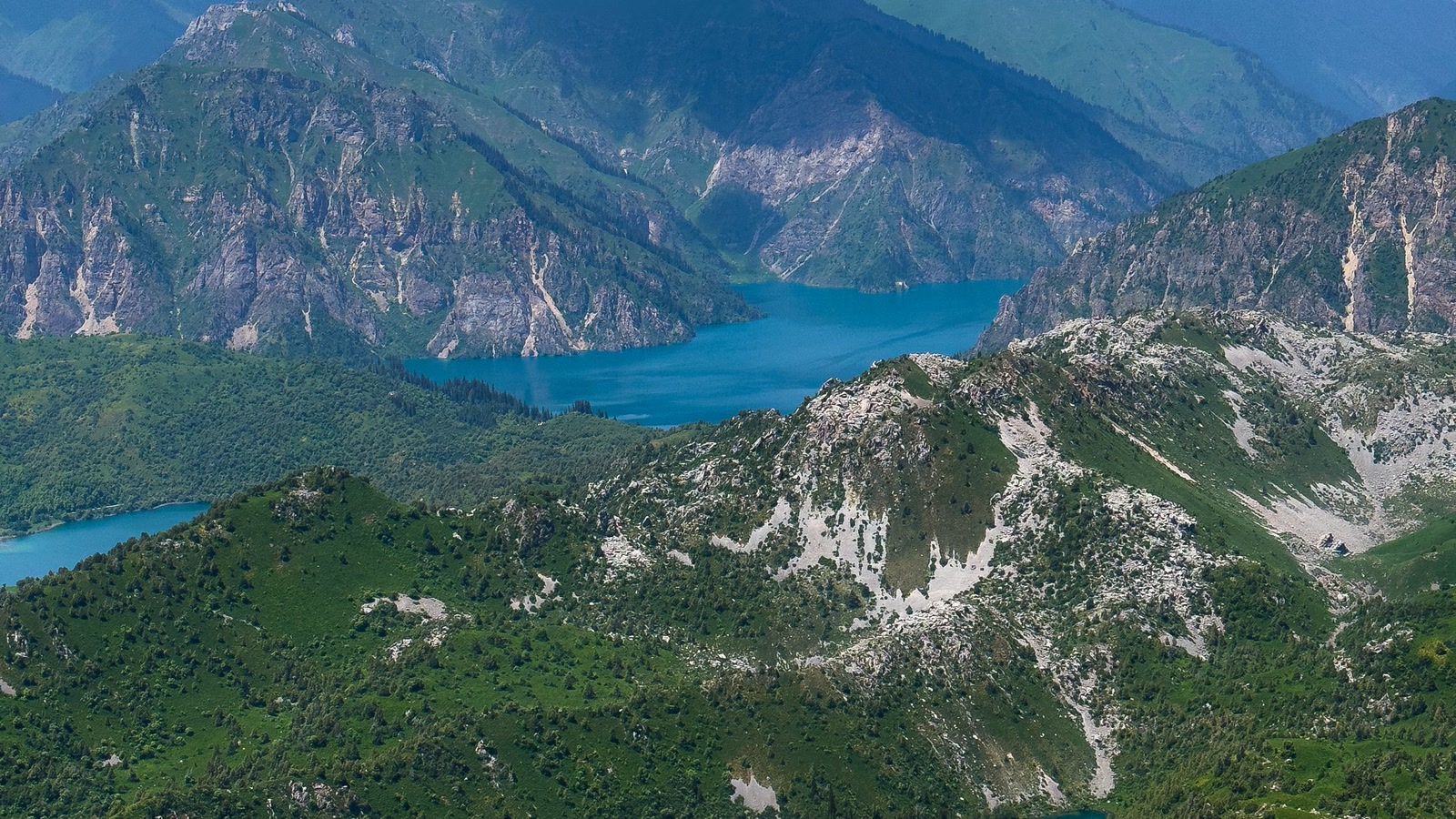
Most Kyrgyzstan trips focus on Issyk-Kul, Song-Kul and the high valleys near Bishkek. The west and southwest of the country feel different: a slice of the Fergana Valley, Silk Road Osh, the walnut forests of Arslanbob, the forested lakes of Sary-Chelek, and the remote mountains of Batken. Uzbek and Tajik influences are stronger here, and tour groups are rarer.
This guide covers the main stops, transport, 2026 border and visa basics, and when to go. Rules in Central Asia change often, so confirm prices and schedules locally.
Western Kyrgyzstan at a Glance
| Item | Details (checked October 2026) |
|---|---|
| Main regions | Osh, Jalal-Abad, Batken |
| Gateway city | Osh, Kyrgyzstan’s second-largest city |
| Visa-free stay | 30 days in any 60-day period for about 55 countries, including the US, UK, Canada, Australia and most of the EU (from Jan 1, 2026) |
| Bishkek to Osh | About 1 hour by air, or roughly 600 to 670 km and 10 to 12 hours by road |
| Currency | Kyrgyz som (KGS); carry cash for villages |
| Best months | Late May to June, and September to early October |
| Key border | Dostuk, Osh to Andijan (Uzbekistan) |
Where Is Western Kyrgyzstan?
The name is a little loose. Travellers usually use it for the Osh, Jalal-Abad and Batken regions, which wrap around the eastern edge of the Fergana Valley. Strictly speaking much of this is the southwest of the country; Talas, in the far northwest, is a separate trip.
The region borders Uzbekistan and Tajikistan, and the border line is famously convoluted, with enclaves on both sides. Many towns, including parts of Osh and Arslanbob, have large ethnic Uzbek communities.
- Osh: the regional hub, with the best transport links, ATMs and hotels.
- Jalal-Abad: a smaller city and the jumping-off point for Arslanbob and Sary-Chelek.
- Batken: the far southwest, remote, rugged and lightly visited.
Osh: Sacred Mountain and Silk Road City
Osh sits at the edge of the Fergana Valley and has been a trading crossroads for a very long time. The city officially marked its 3,000th anniversary in 2000, though the exact age is a matter of debate.
Sulaiman-Too Sacred Mountain is the reason to come. UNESCO inscribed it as a World Heritage Site in 2009, describing a mountain revered for at least a millennium and a half, with ancient cult places, caves with petroglyphs, paths and later mosques across its five peaks. It reflects both Islamic and pre-Islamic beliefs, and it is still an active pilgrimage site, so dress modestly and be respectful around shrines. Go early or late in summer to avoid midday heat. A museum is built into a cave on the mountain, with a small entry fee.
Jayma Bazaar is Osh’s huge main market, stretching along the river with spices, dried fruit, knives, hats and household goods. Do not confuse it with the Osh Bazaar in Bishkek, which is a different market in the capital. Keep valuables close; the UK government warns about bazaar pickpockets.
Food: the south is known for plov (rice with meat, carrots and spices), samsa baked in tandoor ovens, and lagman noodles.
Arslanbob Walnut Forest
Arslanbob is a large village in the Jalal-Abad region, set beneath mountains and surrounded by what is often described as the world’s largest natural walnut forest, roughly 11,000 hectares.
What to do: hike to the big and small waterfalls, walk through the walnut groves, ride horses into the hills, or hire a local guide for longer day hikes.
Where to stay: Arslanbob has one of Kyrgyzstan’s best-known community-based tourism networks, built around family guesthouses. Reported 2026 rates are roughly 1,000 to 2,200 som per person with breakfast and dinner, though some homestays list less. Many old CBT websites are dead, so contact hosts via current listings or WhatsApp, or simply ask on arrival.
Harvest season: for a few weeks from late September into October, many families move into the forest to gather walnuts. Beds get tighter then, so book ahead.
Getting there: from Jalal-Abad, take a minibus or shared taxi to Bazar-Korgon and change for Arslanbob, or take a direct shared taxi (about 1.5 to 2.5 hours). From Osh, plan on about 3.5 to 4 hours. Arslanbob is cash only for most things, so take money out in Osh or Jalal-Abad first.
Sary-Chelek Biosphere Reserve
Sary-Chelek is a deep, forest-ringed lake inside a protected biosphere reserve in the Jalal-Abad region. The reserve is one of the Kyrgyz components of UNESCO’s transnational Western Tien-Shan World Heritage Site, recognised for rich biodiversity and wild fruit forests.
- Gateway: the village of Arkyt, where you pay the reserve fee at the gate.
- Access: roughly 15 to 17 km of unpaved road runs from the gate to the lake. In summer, shared transport may run from the gate; otherwise arrange a ride through your guesthouse.
- Fees: reported reserve fees for foreigners in 2025 and 2026 range from a couple of hundred to several hundred som, plus a vehicle fee. Bring cash and ask for a receipt.
- Season: roughly May to October. Snow can block the road in winter.
Do not try to do Sary-Chelek as a day trip. From Osh or Jalal-Abad the journey takes much of a day, and from Bishkek it can take 10 to 12 hours. Plan at least two nights in Arkyt.
Batken Region
Batken, in the far southwest, is the least visited part of the region. It is known for apricot orchards, which are lovely in spring, and for the high peaks of the Turkestan range to the south, which draw serious trekkers and climbers.
This is also the area most affected by the Kyrgyz-Tajik border disputes. There were deadly clashes in 2021 and 2022, but the two countries signed a border agreement in March 2025. The UK government says there have been no further clashes since, while still advising caution near the border, warning of possible mines and unexploded ordnance in Batken border areas, and noting that movement restrictions can appear at short notice. Stick to main routes, carry your passport, and do not photograph border posts or military sites.
Jalal-Abad and Toktogul
Jalal-Abad is a practical base rather than a destination. It has a long-standing reputation for mineral springs and sanatoriums popular with local visitors, and it is the easiest place to organise transport to Arslanbob and Sary-Chelek.
Toktogul Reservoir is a vast turquoise lake on the main Bishkek to Osh road. It makes a natural rest stop on the overland trip.
How to Get to Western Kyrgyzstan
By air. Flights between Bishkek and Osh take about an hour and are the easiest way to skip the long drive. Osh also has international routes; recent schedules have included Russia, Turkey and Central Asian neighbours, but these change often, so check current flights.
By road. The Bishkek to Osh highway is roughly 600 to 670 km and usually takes 10 to 12 hours, crossing high passes. Winter weather can close passes. Shared taxis are the main public option and leave when full. The UK government advises avoiding flagged-down taxis where possible and using pre-booked services, and notes that minibuses are not always well maintained, so a pre-arranged driver is worth considering for long legs.
From Uzbekistan. The Dostuk (Dustlik) crossing between Osh and Andijan is the main crossing and is described as open around the clock, with a short lunch break. It is busy, especially on market days. Andijan is about 40 to 45 minutes from the border.
From Tajikistan. The Batken to Isfara crossing (Kyzyl-Bel) reopened in March 2025 and serves foreigners. For the Pamir Highway, travellers head from Osh via Sary-Tash to the Kyzyl-Art crossing. Border rules in this corner change frequently, so check recent traveller reports and official advice before committing.
If you are linking several countries, my flashpacker travel logistics hub covers backup plans, money and transit habits that help on long overland days.
Visas, Money and Safety
- Visas: since January 1, 2026, citizens of about 55 countries, including the US, UK, Canada, Australia and most EU countries, can stay visa-free for 30 days within each 60-day period. Before 2026 the limit was 60 days, so older blog posts are out of date. An e-visa is available for longer stays.
- ID: the UK government says you must carry your passport or a notarised copy at all times.
- Money: ATMs are common in Osh and Jalal-Abad but unreliable in villages. Visa is more widely accepted than Mastercard. Carry som in cash for guesthouses, reserve fees and transport.
- Language: English is limited outside hotels. Russian is widely understood, and Uzbek is common in the south. A translation app with offline languages helps.
Best Time to Visit
- Late May to June: green valleys, waterfalls at full flow and comfortable temperatures.
- July to August: hot in Osh and the Fergana lowlands, better for higher ground like Sary-Chelek.
- September to early October: golden forests, settled weather and the Arslanbob walnut harvest.
- November to March: cold and snowy in the mountains, with harder road access and winter power cuts.
For most travellers, late spring and early autumn are the sweet spots. Those months also spare you the Fergana Valley’s summer heat, which is a real plus if you already run warm.
Suggested 8-Day Itinerary
- Days 1 to 2: Osh, with Sulaiman-Too at sunrise and Jayma Bazaar.
- Days 3 to 4: Arslanbob via Jalal-Abad, with waterfall hikes and a guesthouse stay.
- Days 5 to 7: Sary-Chelek, with two nights in Arkyt.
- Day 8: back to Osh or Jalal-Abad, or cross into Uzbekistan via Dostuk.
More Off-the-Beaten-Path Guides
If you like big, empty landscapes, my Gobi Desert trip guide covers another remote Asian steppe. Turkmenistan’s Darvaza gas crater is a classic addition to a wider Central Asia loop, though visa rules there are far stricter. For a completely different kind of rugged travel, see my Ethiopia and Horn of Africa hub.
FAQs
Is Western Kyrgyzstan safe for travellers?
Generally, yes, with normal precautions. The UK government has no warnings against travel to the region, but it does advise caution near the Tajik border in Batken and warns about pickpockets in bazaars.
How long can I stay without a visa?
For about 55 nationalities, 30 days in any 60-day period since January 2026. Check your own passport’s rules on Kyrgyzstan’s official e-visa portal before you go.
How do I get from Bishkek to Osh?
Fly in about an hour, or drive roughly 10 to 12 hours on the mountain highway by shared taxi or private driver.
When is the walnut harvest in Arslanbob?
Usually from late September into October. Book guesthouses ahead during those weeks.
