
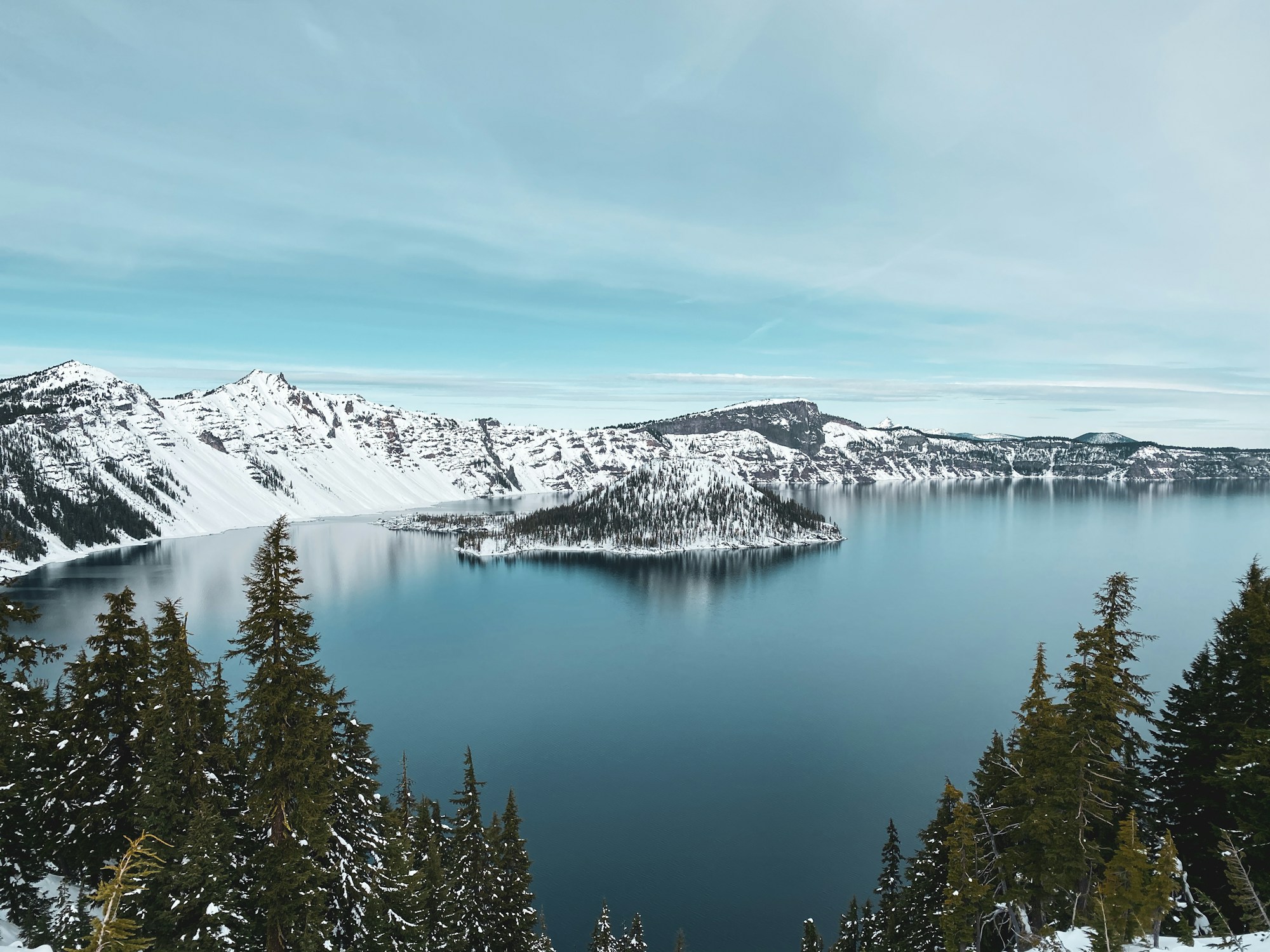
Crater Lake looks simple on a postcard: a deep blue bowl inside a collapsed volcano. Spring is messier. Snow still owns the rim well into May and often June. Most of Rim Drive stays closed. Boat tours and the trail to the water are out of reach. What you do get is quieter viewpoints, a white rim against that famous blue, and a visit that rewards people who plan around access instead of wishing for July.
This guide covers month-by-month spring access, base towns and drive times, a midlife-friendly half-day plan, packing without a gear essay, and honest weather for photos. Plow progress, lodge dates, and road openings change every year. Treat the windows below as planning patterns. Check NPS Current Conditions and Oregon TripCheck for Highway 62 before you leave.
Building a wider Oregon loop? Start with the Western US parks and road trips hub. For a dry-side contrast after the Cascades, John Day Fossil Beds National Monument pairs well once you head east.
At a glance
| Item | Spring reality |
|---|---|
| Best access | Highway 62 (west from Medford or south from Klamath Falls); open year-round, plowed |
| Typical lake views | Rim Village when the spur is open |
| Rim Drive (33 miles) | Closed to cars for most of spring; plowing often starts mid-April on West Rim; full loop often late June to mid-July |
| North Entrance | Usually closed until late May–July, snow year depending |
| Boat tours / Cleetwood | Typically summer; plan July or later for water access |
| Crowds | Low vs July–August |
Month-by-month spring access
On a calendar, spring is March through May. On the rim, near 7,000 feet, it often feels like winter with longer daylight. NPS calls Crater Lake one of the snowiest inhabited places in the U.S.; annual snowfall is commonly cited in the 40-to-50-foot range, with deep drifts along Rim Drive.
March. Heavy snowpack. Highway 62 is the reliable car route. Rim Village access depends on storms and plowing. Fog can erase the lake. When it clears, blue water against white cliffs is the whole point of the day.
April. Still snow-dominant. NPS typically begins spring opening on West Rim Drive around mid-April. That does not mean you can drive the rim. Crews push snow with dozers and rotary plows, often slowly (public NPS writing has described about a fifth of a mile cleared per day when conditions allow). Late storms can bury fresh work. At Rim Village you may walk packed overlooks or snowshoe a short way beyond plowed edges. Stay far back from the caldera rim; soft edges and cornices are real.
May. Lower approaches soften, but the rim can still feel wintry. Sunny weekends draw more cars. Crater Lake Lodge often targets a mid-May opening when snow removal allows; Mazama cabins and the campground usually lag (often late May into June for cabins, June for the campground). Do not count on Rim Drive, most summer trails, or Cleetwood Cove.
June. Transition month. West Rim and the North Entrance sometimes open in late May or June in lighter snow years; heavy years stretch toward late June or July. East Rim often finishes later than West Rim. Boat tours and many trailheads wait for the road network. Need the full loop, a boat, or Cleetwood? Aim for July through September.
What opens first (and what does not)
Usually workable: Highway 62 west and south entrances (year-round; temporary closures for weather or incidents). Steel Visitor Center / headquarters area when hours allow. The Rim Village spur for lake views when plowed. On a clear day, Rim Village is enough. You do not need the full loop to justify the drive.
Usually closed or limited: Rim Drive for cars through most of spring (no fixed reopen date; “all roads ready†often lands near mid-July with wide scatter in NPS opening tables). North Entrance until spring opening finishes. East Rim later than West Rim. Cloudcap, Pinnacles, and most trailheads. Boat tours and swimming at Cleetwood Cove.
Snowshoe vs walk. When crews expose road segments, NPS sometimes welcomes hikers and bikes on cleared pavement before cars return. Walk in the middle of the road when bank walls are tall; falling ice and snow are a known hazard. Give dozers space. Short walks work on packed Rim Village paths with waterproof boots. Snowshoes help once you leave packed surfaces. The park does not groom a resort-style Nordic network. Ranger-led snowshoe walks have historically run on some winter and early-spring weekends; check the current schedule. Stay well back from the caldera edge, especially during melt.
Base towns and drive times
Spring trips work best as day drives from a town with lodging and groceries.
| Base | Rough drive to rim area | Spring notes |
|---|---|---|
| Klamath Falls | ~55–60 miles / 1.25–1.5 hours via US-97 + Hwy 62 | Shortest full-service base for many spring visits |
| Medford | ~70–80 miles / 1.75–2.25 hours via Hwy 62 | Closest major airport (MFR); more restaurants and lodging |
| Bend | ~100–130 miles / 2–3+ hours | North Entrance often closed; plan the longer south-entrance detour via US-97 and Hwy 62 |
Closer towns (Fort Klamath, Prospect, Chemult) cut drive time when rooms are open, but services are thinner. Fill the tank in Medford or Klamath Falls. Shaded ice can linger on Hwy 62 after a freeze; carry chains when Oregon conditions or requirements call for them.
A midlife-friendly half-day plan
Pace is the point. No need to treat this like a winter expedition.
- Leave Klamath Falls or Medford after breakfast. Build buffer for slow traffic or a brief chain-up.
- Stop at Steel Visitor Center if open. Ask what is plowed today.
- Continue to Rim Village. Walk the main overlooks. Sit. Take the photo. Do not rush the first clear view.
- Optional short extension: a careful packed-path walk or brief snowshoe near Rim Village if conditions feel solid. Turn around while knees still feel cooperative.
- Warm up indoors if any cafe or lodge space is open; otherwise bring a thermos.
- Drive down before late-afternoon weather swings.
Two to three unhurried hours at the rim can feel complete. That is enough for many midlife road-trip days.
Weather and photography honesty (April–May)
Expect swings, not mild wildflower weather. Highs often in the 30s to 50s °F; nights in the teens to 30s. Bright sun, then whiteout or fog that hides the lake even when the parking lot is clear.
The deep blue is real, but it needs clear air and light on the water. White rim, dark pines, and blue water on a sharp day are spectacular. On a gray day you may get a muted steel bowl and a lot of white. Still worth seeing. Not the saturated summer postcard every hour. Midday is flatter light but safer underfoot. Bring sunglasses and sunscreen; snow glare is harsh even when it feels cold.
Packing (short list)
Warm layers you can peel. Waterproof boots with real tread (microspikes help on icy overlooks). Hat, gloves, warm socks. Sunglasses and sunscreen. Water and snacks; shoulder-season food in the park can be limited or closed. Snowshoes only if you leave packed surfaces (rent in Medford or Klamath Falls if needed). Chains or approved traction for the car, plus a full tank.
Where to stay
In the park: Crater Lake Lodge typically opens mid-May through early October when operations allow. Mazama Village cabins often open late May into September. Mazama Campground is usually June through late September. Confirm the concessioner calendar for your year.
Outside: Klamath Falls and Medford give the widest lodging and food choices in spring. Smaller gateways cut morning drive when rooms are available. Prefer refundable rates when storms might rewrite the weekend.
Pros, cons, and a simple stitch
| Pros | Cons |
|---|---|
| Blue water against a white rim | Rim Drive and North Entrance usually closed |
| Fewer people at viewpoints | Weather can erase the view |
| Quiet short walks or snowshoe | Boats and most trails unavailable |
| Easy day-trip from Klamath or Medford | In-park lodging and food may still be shut |
Half day: base town → visitor center → Rim Village → optional short snowshoe → down before weather turns. One overnight nearby: afternoon rim light, early morning retry if clouds ruined day one, then toward Bend, Medford, or east toward John Day country. Cascades drama first, then dry hills at John Day Fossil Beds. The Western US parks hub helps place both on a longer map.
Bottom line
Crater Lake in spring is worth the drive if your goal is the view, the quiet, and the snow-rim contrast. It is the wrong season for the full road loop, a boat, or long dry trails. Come via Highway 62, treat Rim Village as the prize, pack for winter underfoot, and verify plow status the morning you leave. When the lake shows against that white rim, you will understand why people still come before summer fully opens.
FAQs
Is Crater Lake open in the spring? Yes. The park is open year-round. Access is limited: Highway 62 and (when plowed) Rim Village are the usual spring combo until Rim Drive and the North Entrance reopen.
Can you drive around Crater Lake in the spring? Usually no. Rim Drive stays closed to cars through most of spring. Sections reopen in stages, often from late May into July depending on the snow year.
What is the weather like in May? Cool, changeable, often still snowy on the rim. Highs frequently in the 40s to 50s °F. Dress for winter walking conditions even on a sunny forecast.
Are snowshoe hikes available? Sometimes. Check the current NPS schedule for ranger-led walks. Independent snowshoeing near Rim Village is common while snow remains; keep rim-edge caution.
Best time for full access? July through September for Rim Drive, most trails, and typical boat-tour seasons. Spring is limited access and snow aesthetics, not the complete summer checklist.
