
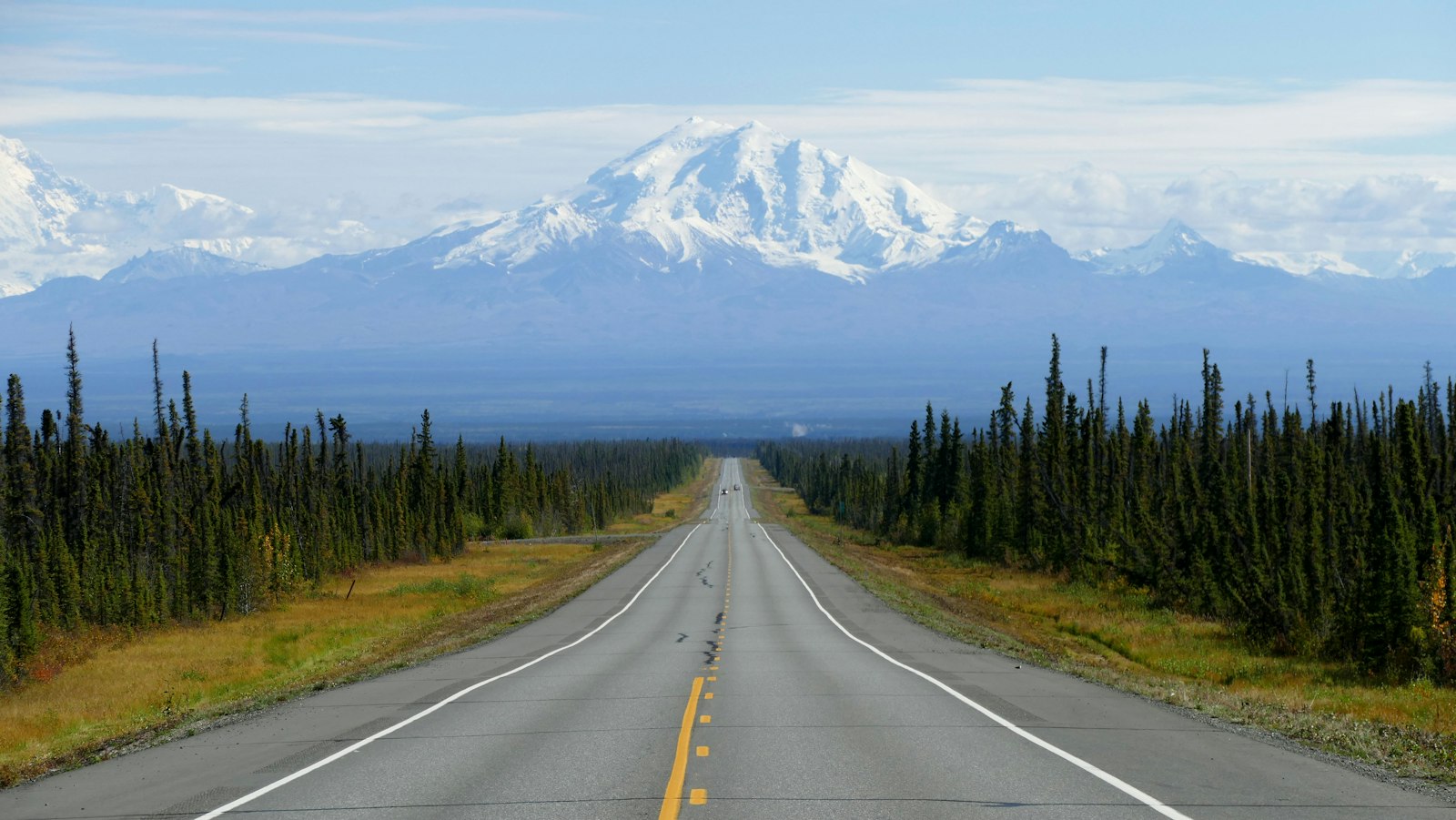
A day trip from Anchorage to Whittier is one of the easiest ways to taste Alaska’s coastal side without a long inland haul. The town sits about 60 miles southeast of the city on Prince William Sound, hemmed in by steep mountains and glaciers. The catch, and the adventure, is the Anton Anderson Memorial Tunnel: North America’s longest combined rail and highway tunnel, and the only road into town.
For seasons, pacing, and how Whittier fits a wider Interior-to-coast route, start with my Northern & Arctic overland travel hub.
You get mountain views along Turnagain Arm, a timed one-way tunnel passage, and a harbor that still feels like a working port. Glacier cruises, short hikes, and dock walks all fit a single day if you build the schedule around tunnel openings instead of hoping the gates will wait for you.
The Drive from Anchorage to Whittier
The Seward Highway out of Anchorage hugs Turnagain Arm, known for extreme tides and Chugach Mountain views. Beluga Point is worth a short pullout if you have time; late summer can bring beluga sightings. Bird Point has interpretive signs and wide Arm views. Neither stop needs long.
Pure driving time from Anchorage to the Bear Valley (Portage) tunnel staging area is about an hour. With photo stops you land closer to 75 to 90 minutes before you join the queue. Near Milepost 79 you pass the Alaska Wildlife Conservation Center, then turn left onto Whittier/Portage Glacier Road for the final approach.
Do not race the highway. Speeds get checked, and a missed tunnel slot costs more than a careful arrival.
The Whittier Tunnel: Timing, Tolls, and Missing a Slot
The Anton Anderson Memorial Tunnel runs 2.5 miles through Maynard Mountain. Cars and trains share one lane. Traffic moves in only one direction at a time from staged waiting areas at each end.
How the one-way windows work (summer)
In summer (May 1 to September 30), the tunnel is typically open daily from 5:30 a.m. to 11:15 p.m.:
- Toward Whittier (Bear Valley to Whittier): openings on the half hour (5:30, 6:30, 7:30, and so on).
- Leaving Whittier (Whittier to Bear Valley): openings on the hour (6:00, 7:00, 8:00, and so on).
Each vehicle window lasts about 15 minutes. Be in the staging area about 10 minutes before your opening. The drive through takes roughly 10 minutes once you are rolling.
Winter hours (October 1 to April 30) run roughly 7:00 a.m. to 10:45 p.m., with gates locked around 11:00 p.m. In freezing weather, openings can shrink to the last five minutes of the published window. Confirm the live schedule on the Alaska DOT Whittier Tunnel pages before you go. Near the portals, AM 1610 (Portage) and AM 530 (Whittier) carry updates.
Trains share the bore. Unscheduled rail traffic can add 15 to 30 minutes of delay even when the posted clock looks clear. Build that buffer into cruise check-ins and evening returns.
Tolls and payment
Tolls are sold as round-trip tickets and collected when you drive into Whittier. The return out of town is free.
Public rates (confirm before travel):
- Class A (standard passenger cars, motorcycles, RVs under 28 feet not pulling trailers): about $13
- Class B1 (passenger vehicles pulling trailers; RVs 28 feet or longer not pulling trailers): about $22
- Higher classes apply for larger buses, heavy trucks, and oversize loads
Payment at the booth typically accepts cash, checks, Visa, and Mastercard. Online tickets are also available through the state’s YODEL portal for some classes. Keep a card and some cash handy.
If you miss a slot
Miss the half-hour inbound opening and you wait for the next same-direction window, usually about 30 minutes later, plus any train delay. Glacier cruise operators often require an inbound tunnel no later than mid to late morning (commonly the 10:30 a.m. window for longer cruises). Check your operator’s cutoff, then aim one full cycle earlier than you think you need. Do not cut the last outbound so fine that a train delay leaves you overnight without a plan.
RV and trailer notes (high level)
RVs and trailers use the same timed windows and often pay a higher toll class. Oversize vehicles are restricted to specific Monday to Thursday openings. Staging lanes segregate vehicle types. Know your combined length and class before the booth, and give yourself extra time to stage. Convertibles need the top up; motorcyclists need helmets.
Timed Sample Day (Clock Anchors)
Summer template. Shift earlier in peak July for a full Sound cruise; later in shoulder season when docks feel quieter.
| Clock | Move |
|---|---|
| 7:00 to 7:30 a.m. | Leave Anchorage. Optional Beluga Point or Bird Point only if ahead of schedule. |
| 8:30 a.m. | Be staged by about 8:20 for the 8:30 inbound (Bear Valley to Whittier). |
| About 8:40 to 9:00 a.m. | Through the tunnel. Pay the inbound toll on the way in. |
| 9:00 to 10:30 a.m. | Harbor walk, coffee or early lunch. Or go straight to cruise check-in. |
| 10:30 a.m. to 3:30 p.m. | A: Glacier / Sound cruise. B: Portage Pass hike (~4 miles round trip, moderate). C: Low-effort docks and public history views. |
| 3:30 to 4:45 p.m. | Buffer. Stage 10 minutes before your outbound hour. |
| 5:00 p.m. | Outbound on the hour. Miss it? Take 6:00. |
| 6:00 to 7:30 p.m. | Drive back along Turnagain Arm to Anchorage. |
If a longer glacier cruise is the priority, leave Anchorage by 6:00 to 6:30 a.m. and take the 7:30 or 8:30 inbound so you are not gambling on the last allowed boarding tunnel.
Things to Do in Whittier
Whittier is small. Pick one headline activity and leave room for weather.
Explore the harbor
Fishing boats, tour vessels, and kayaks sit under mountains that rise straight from the water. A dock walk is free and photogenic. Public parking is commonly near Whittier Street across the railroad tracks; budget a modest lot fee on top of the tunnel toll.
Take a glacier cruise
Glacier cruises are the biggest draw. Tours run from a few hours to a full day past tidewater glaciers, waterfalls, and wildlife such as sea otters, seals, and sometimes whales. Book ahead in July and August, and build tunnel buffers around check-in.
Hike Portage Pass
Portage Pass Trail climbs from the Whittier side to views of Portage Glacier and Portage Lake: about 4 miles round trip, moderate. Clear days are spectacular. Socked-in days are still a workout with limited payoff, so keep a harbor backup.
Local history in brief
Whittier grew as a World War II military port. Most residents still live in Begich Towers. The abandoned Buckner Building remains a striking shell of that past. View from public areas; do not treat ruins as playgrounds.
Kayaking and fishing
Kayak rentals and guided paddles leave from the harbor. Fishing charters target salmon, halibut, and rockfish. Both need tighter scheduling than a dock walk when the tunnel owns your exit.
Is It Worth It Without a Cruise Booking?
Yes, for many day-trippers.
A cruise is the richest way to see tidewater ice up close, but it is not required to justify the drive. Without a boat ticket you still get the Seward Highway / Turnagain Arm approach, the tunnel itself, harbor and mountain views, Portage Pass on a clear day, and a compact look at Whittier’s odd military-town layout.
Skip the cruise if weather is poor, if you dislike fixed boarding times, or if you want a lighter budget day. Choose the cruise if Prince William Sound ice is why you pointed the car southeast. Plan the tunnel first either way.
For another coastal boat-to-ice day, see my Seward guide. For a longer Sound-port stay, Valdez is the deeper fjord base (road or ferry via Whittier).
Crowds, Shoulder Season, and a Lighter Day
Peak summer and ship days pack docks, lots, and restaurants. For thinner crowds, aim for late May, early June, or early September, when daylight is still long and services mostly run. Midweek usually feels calmer than weekend ship days.
A lighter day that still works: one careful inbound tunnel, harbor walk and coffee, short waterfront time or a truncated hike if weather turns, then an early outbound on the hour. You do not need a full Sound cruise and Portage Pass on the same day. Pick one bigger effort. That pacing matters more as travel days get longer and recovery gets slower.
Practical Tips for a Day Trip
- Screenshot or print the tunnel schedule; stage about 10 minutes early.
- Pack a rain shell and layers. Whittier is one of Alaska’s wetter towns.
- Bring snacks; food options thin out off-peak.
- Watch for moose on the Seward Highway and sea otters in the harbor.
- Add 15 to 30 minutes of buffer when you must make a boarding time.
- For broader month-by-month driving advice, use Best Time to Drive an Alaska Road Trip.
Best Time to Visit
Late May through early September is the main window: long daylight, cruises running, trails usually workable. July and early August are busiest. Shoulder weeks trade some service breadth for thinner crowds. Winter keeps the shorter tunnel schedule, but activities shrink hard. Treat winter as a specialty trip, not a casual harbor day.
Why Whittier Works as a Day Trip
Whittier sits close enough to Anchorage for a true out-and-back. You sample coastal Alaska, a one-of-a-kind tunnel, and either easy dock time or a Sound cruise without changing hotels. It also stitches into a Kenai / Seward chapter, a Sound ferry leg toward Valdez, or a wider loop from the northern hub. If your map already includes remote Interior ice, Kennecott and the Root Glacier is a different kind of glacier day. Whittier is the quick coastal counterpoint from Anchorage.
Final Thoughts
Anchorage to Whittier rewards people who respect the clock. Nail the inbound half-hour window, pick one main activity, and leave yourself a clean outbound hour. The tunnel is the gate. Once you are through it, the harbor, the Sound, and the mountains do the rest.
Whether you book a glacier cruise or simply walk the docks in the rain, Whittier delivers a full coastal chapter in a single day. Build the schedule around the openings, and the day stays calm instead of scrambled.
—
