
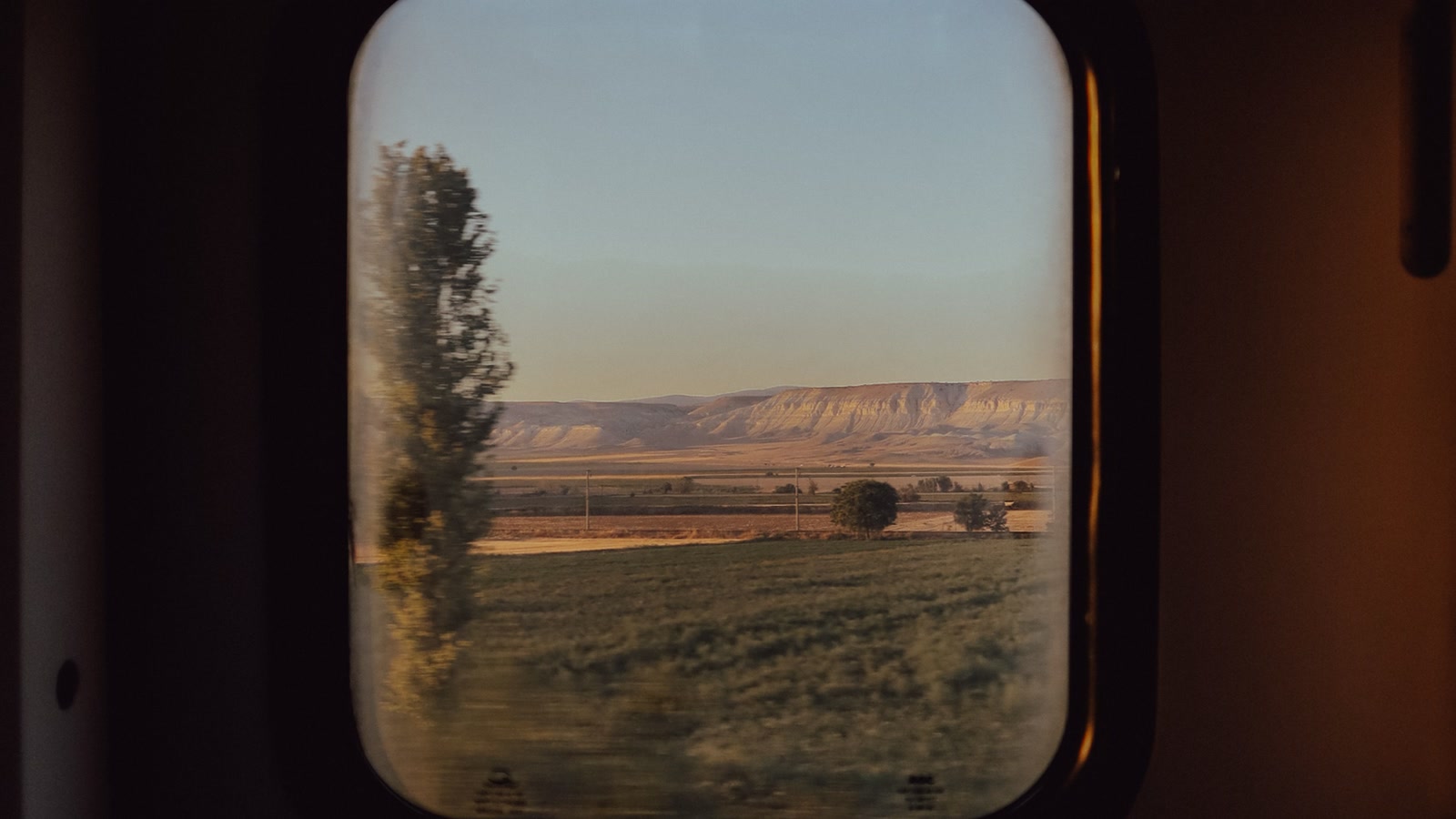
The Ulaanbaatar to Beijing train is the short, practical slice of the Trans-Mongolian story most independent travelers can actually book. Roughly 1,550 km. About 30 to 31.5 hours. Steppe, then Gobi, then a late border stop where the wheels under your carriage get swapped because Mongolia and China do not share a track gauge.
It is not the fastest way between the two capitals. Flights cover the same cities in a couple of hours. The train is for people who want the distance to feel real, and who can live with a weekly timetable, paperwork that must be right before boarding, and a border night that eats sleep.
Service on this pair resumed in June 2025 after a multi-year pause. Schedules, departure days, fares, and visa rules still move. Treat every time and price below as a planning range, then confirm on Mongolian Railways (UBTZ), China Railway channels, your booking agent, and the relevant consulates before you pay.
For transit-as-the-trip context (sleep, long trains, border days), start with my flashpacker travel logistics hub. For the wider overland pacing habits I use on slow northern routes (buffer days, early booking, comfort that buys rest), use the Northern and Arctic overland travel hub. Different continent. Same job: stack long days correctly.
Who this guide is for
- Travelers with spare calendar days who want Mongolia-to-China as an experience, not only a relocation
- Planners who will book a weekly sleeper early and double-check visas before the ticket is non-refundable
- Soft-sleeper people who care more about a door and a bunk than about maximizing scenery per hour
- Anyone stitching Ulaanbaatar and Beijing into a longer Asia overland spine
Skip this page if you have a tight same-day connection in Beijing, if you cannot get a Chinese visa in time for a rail entry, or if your body already hates one overnight bus and you were hoping this would feel shorter. It will not.
Train vs fly
Flying wins on clock and simplicity. Ulaanbaatar to Beijing is a short hop by air. You land the same day, and you skip immigration-at-midnight plus hydraulic jacks under the carriages.
The train wins when the window is the point. You watch grasslands thin into Gobi scrub. You share a compartment with strangers who become temporary neighbors. You feel the capital-to-capital distance in your sleep, the way a flight quietly erases it.
Cost is not always the deciding factor. Soft sleeper on this international pair can land near a simple flight once you add bags and city transfers, depending on season and booking timing. What you are buying is time and texture, not a guaranteed bargain.
Choose the train when you have buffer on both ends and want the bogie-change story. Choose the flight when the calendar is mean, when visas for rail entry are messy for your passport, or when you already spent the week on hard overland days and need a reset. Hybrids work too: train one way, fly the other.
If you like other slow rails where patience is the ticket, see road and train to Churchill. For gravel and Arctic Ocean context that pairs with that northern hub, see Driving the Dempster Highway to Tuktoyaktuk.
Soft sleeper vs hard (and deluxe)
Public listings for the Beijing to Ulaanbaatar pair usually show three berth ideas:
- Soft sleeper: Four bunks in a closed compartment with a door. The traveler default for privacy without a private cabin.
- Hard sleeper: The cheaper berth. Exact layout depends on which consist is running that week (China Railway and Mongolian Railways rotate). Sometimes a lower-priced four-berth compartment; sometimes a more open hard-sleeper bay. Do not assume classic Russian open six-bunk cars just because older blogs say so. Check your ticket class description.
- Deluxe / luxury soft sleeper: Two bunks, more space, sometimes private washroom facilities when that car is attached. Highest fare. Limited inventory.
Each carriage typically has hot water, basic toilets, and an attendant. A dining car is often attached for part of the run. Bedding is normally provided in soft and deluxe classes; confirm what your fare includes.
Rough fare ballparks from recent public lists (one-way, verify on booking day): hard sleeper often in the low hundreds USD (some lists show about CNY 990 from Ulaanbaatar); soft sleeper commonly mid hundreds USD (lists often show about CNY 1,100 from Ulaanbaatar); deluxe higher, sometimes $250 USD and up. Beijing-origin and Ulaanbaatar-origin fares are not always symmetric. Agents add fees. Summer sells first.
Booking realities (2025 to 2026)
This is a weekly international train, not a domestic hop you grab the night before.
Train numbers (easy to mix up):
- Ulaanbaatar to Beijing: usually 024 in Mongolia and K24 in China
- Beijing to Ulaanbaatar: usually 023 / K23
Departure weekdays have shifted by season. Recent public timetables often show a Thursday morning departure from Ulaanbaatar and a Saturday morning departure from Beijing. Confirm the live calendar for your month.
How people book: UBTZ e-ticketing and its app when international inventory is open; specialty rail agents and tour desks that handle passport data; designated international ticket windows in Beijing or Ulaanbaatar (cash, limited English, passport required).
Expect passport details (and often visa or entry-permission details) at booking. Some agents still deliver paper tickets to a hotel a few days before departure. Lead time of about two months is the common summer advice, especially June through September soft sleepers. There are no casual open tickets for hopping off mid-route on the international fare.
Moscow to Beijing through trains via Mongolia remain a separate, often-suspended story. Do not plan this pair as if it still connects onward to Russia on the same ticket.
Visas (verify on the day)
Visa rules strand people more often than the scenery does.
- China: Entering by this train is not the same as flying into a transit-exemption program. Many nationalities need a valid Chinese visa (or other permission that covers rail arrival) before boarding. Short transit visa-free schemes are often written around air routes and designated ports. Do not assume a 24-hour or 10-day transit rule covers K23/K24. Check current embassy / immigration guidance for your passport.
- Mongolia: Many nationalities visit visa-free for tourism for a set number of days, and some temporary exemption lists have run through the end of 2026 for named countries. Other passports still need a visa. Confirm before you book non-refundable rail.
Carry the passport you booked under. Keep photocopies. Fill arrival cards early so you are not writing at 1 a.m. with a dead pen.
Border day: Zamyn-Üüd, Erenhot, and the gauge change
Southbound, Mongolian exit formalities happen at Zamyn-Üüd. Chinese entry and the mechanical problem happen at Erenhot (Erlian). Northbound reverses the order.
Mongolia runs on the wider Russian gauge (1,520 mm). China runs standard gauge (1,435 mm). At Erenhot, carriages go into a shed, get lifted on jacks, and receive a new set of bogies. Immigration, customs, and the wheel change together often take several hours, commonly late evening into the small hours.
Passenger rules during the lift vary in traveler reports: some runs let people stay aboard; others move everyone to a waiting area. Follow staff on the day. Toilets may be locked. Keep valuables and a warm layer with you if you leave the carriage.
This is normal operations, not a breakdown. Pack patience, a snack, and low expectations for sleep that night.
Sample timing (planning sketch only)
Live departure days and clock times change. Use this as a shape only.
Southbound sketch (often published as a Thursday departure):
- Morning: board at Ulaanbaatar Railway Station (Peace Avenue area). Arrive early.
- Midday to afternoon: steppe and small stations (Choir, Sainshand on many published stops).
- Evening: Mongolian border at Zamyn-Üüd.
- Late evening into night: Erenhot for Chinese formalities and bogie change.
- Next morning: Chinese countryside (Jining South often appears on tables).
- Afternoon: arrive Beijing Railway Station. Subway, taxi, or ride-hail to your hotel.
Published duration is often about 31 hours. Leave a loose evening in Beijing after arrival. Do not book a same-night commitment that assumes an on-time platform.
Northbound sketch: morning Beijing departure, overnight border, next-day afternoon Ulaanbaatar on many recent public tables. Verify the weekday.
Scenery along the way
You are not buying mountains every hour. You are buying a slow change of mood: open Mongolian grass and gers, then drier Gobi approaches, then denser Chinese farmland into Beijing. Sunsets do a lot of the work when the land looks empty on a map. Bring a book for the beige hours.
Comfort tips
- Soft sleeper is the flashpacker move for most people: a door, four bunks, less corridor traffic
- Earplugs, eye mask, and layers beat clever packing cubes. Compartments run hot, then cold, then weird
- Hot water is reliable. Instant noodles, tea, fruit, and snacks cover dining-car gaps
- Small-bill cash (tögrög on the Mongolia side, yuan in China; some USD still accepted in pockets of international rail culture). Cards fail at the wrong snack cart
- Download entertainment. Do not bet on Wi-Fi
- Toilet paper, wet wipes, hand sanitizer, and basic meds in a day bag you can grab during border chaos
- One midlife comfort note, kept light: if overnight heat swings wreck you, soft sleeper plus peelable layers is not vanity. It is how you still enjoy Beijing the next afternoon
- Lower bunk if you have a choice and stairs annoy you at 2 a.m.
Practical checklist
- Confirm train number, weekday, and exact times for your travel month
- Book soft sleeper early for June to September
- Verify Chinese entry rules for rail, not only for air transit
- Verify Mongolian entry rules for your passport
- Overnight in Ulaanbaatar before a morning departure so you are not racing a late ger-camp transfer
- Pack snacks beyond optimism
- Leave buffer before any non-refundable Beijing commitment
- Recheck baggage weight and prohibited items on the operator rules for your booking year
Final thoughts
The Ulaanbaatar to Beijing train is transportation with a plot. Capitals at both ends. Desert in the middle. A border night that reminds you countries still disagree about how wide a railroad should be.
If you have the days, take it. Book the class that lets you sleep. Verify the visas like a grown-up. Then let the window do the work the plane refuses to do.
