
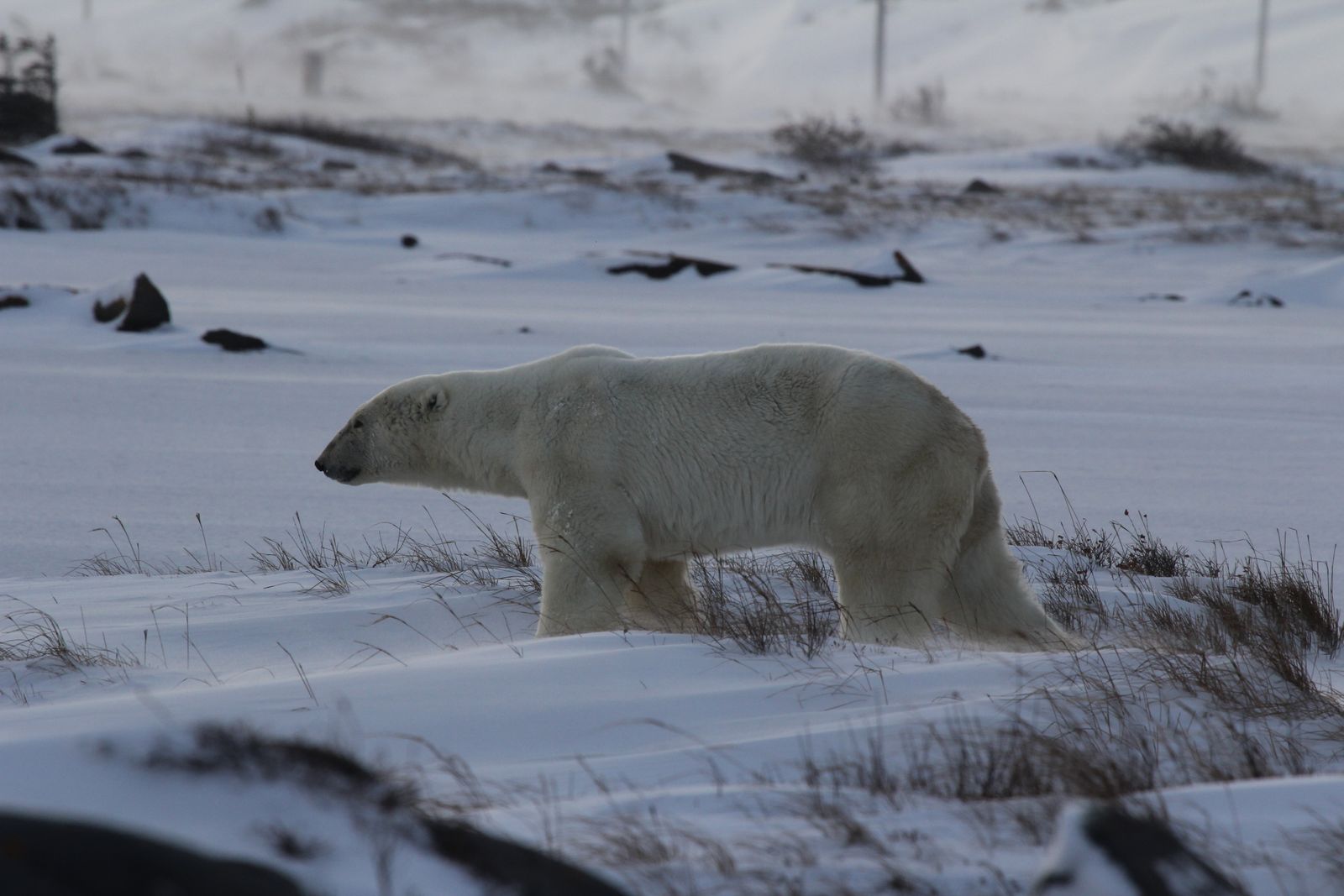
Churchill sits on Hudson Bay with no all-season road in. Most visitors fly. The other option is slower and stranger: drive (or bus) to a Manitoba railhead, then ride VIA Rail across boreal forest and open tundra into town.
This guide covers the practical path. Journey stages with rough durations. Which months match polar bears, belugas, and northern lights. Cost ballparks and booking lead time. And a clear train-versus-fly trade-off. Schedules, fares, and tour availability change; treat every number here as a planning range and confirm on VIA Rail, airlines, and operators before you commit.
For the wider northern map (distances, season logic, comfort versus grit), start with the Northern & Arctic overland travel hub. Routes like the Dempster Highway to Tuktoyaktuk and time in Inuvik sit in a different Arctic corridor, but the same habits apply: buffer days, cold platforms, and booking early when wildlife seasons peak.
Why Churchill is hard to reach
Geography did the isolating work. Boreal forest and wetlands stretch south. Tundra opens north toward Hudson Bay. No permanent highway connects Churchill to the rest of the road network. That leaves two public ways in: fly to Churchill Airport (YYQ), or take the train.
The train is a regional lifeline, not a luxury product. It moves residents, freight, and visitors. The ride is long. Delays happen. The payoff is scenery few people see from a plane window, plus a clearer sense of how remote this coast really is.
Journey stages: drive, railhead, train, then Churchill days
Think of the trip in three blocks. Build buffer time between each one.
Stage 1: Reach a railhead (half day to one long day)
Common boarding points:
- Winnipeg. Full VIA Rail service to Churchill. Published average duration is about 1 day 21 hours (roughly 45 hours) over roughly 1,700 km. Departures are limited, often about twice weekly on published schedules. Good if you are flying into Manitoba and want one ticket.
- The Pas. Further north on the same line. Shortens onboard time versus Winnipeg (often cited around 36 hours to Churchill, still subject to change). Reachable by road from southern Manitoba and Saskatchewan.
- Thompson. The usual road-and-rail compromise. About 760 km north of Winnipeg; the drive is commonly 8 to 9 hours in good conditions. Flights from Winnipeg to Thompson take roughly 2 hours. From Thompson, the Churchill leg is often about 16 hours overnight. Many travelers overnight in Thompson the night before departure so they are not racing a delayed highway day into a fixed boarding time.
If you board in Winnipeg on a through train, expect a long stop in Thompson (often several hours on published timetables). You can stretch legs, buy food, and reset. If you drive to Thompson yourself, you skip the Winnipeg-to-Thompson rail hours and park or overnight locally before boarding north.
Stage 2: The train north (overnight, sometimes two nights)
From Thompson, plan on one overnight and a morning arrival in Churchill on a typical timetable. From Winnipeg, plan on two nights aboard. Track conditions, weather, and freight priority can stretch either option. Do not book a same-day tour that assumes an on-time arrival.
Classes typically include Economy (reclining seats) and limited Sleeper Plus space (berths or cabins). Food is usually for purchase; meal inclusion rules differ from corridor trains, so check the fare page for your date. Bring snacks anyway. The ride is slow enough that scenery becomes the main entertainment: spruce and lakes giving way to thinner taiga, then open wetland and tundra as you near the bay.
Stage 3: Churchill days (plan at least 2–4 nights in town)
The town is small. Many lodgings and tour desks sit within walking distance of the station. Still, transfers, gear, and cold platforms slow you down. Build at least one spare evening after arrival before any non-refundable tour. On the way out, leave buffer before flights or southbound rail.
Overnight strategy in plain terms:
- Night before rail (Winnipeg or Thompson lodging if you are driving to the train).
- Night(s) on the train (Economy seat or sleeper).
- Multiple nights in Churchill matched to your wildlife goal.
- Southbound train or flight with a spare day if your schedule is tight.
Season matrix: bears, belugas, northern lights, and the train
Churchill’s three headline draws sit in different windows. The train runs year-round on a limited schedule, but lodging and tours do not. Match the month to the goal first, then lock transport.
| Goal | Typical peak window | Train / booking notes |
|---|---|---|
| Polar bears | October–November (often strongest mid-Oct to mid-Nov) | Book rail, lodging, and tundra vehicle tours early. Peak demand. |
| Beluga whales | July–August | Summer trains still limited per week; whale tours sell out in busy weeks. |
| Northern lights | February–March; also possible when nights lengthen in late summer/early fall | Winter rail means cold platforms and gear-heavy bags. Clear skies matter. |
| Overlap try | Late August (sometimes into early September) | Possible belugas + findable bears + dark enough nights for aurora. Not guaranteed. |
Public tourism guidance is consistent: fall for peak bears, summer for belugas, deep winter for aurora priority. Late summer is the period most often discussed as a chance at all three. If you only get one season, pick the animal or sky you care about most.
Midlife comfort, kept light: long Economy rides are doable if you move often, pack a neck pillow, and accept interrupted sleep. Cold platforms punish thin footwear. A sleeper, when available, is less about luxury and more about lying flat.
Cost ballpark and booking lead time
Prices move with season, class, and how early you book. Use these as order-of-magnitude ranges only, then verify.
Train (CAD, approximate)
- Economy Thompson–Churchill: often cited in the low hundreds one-way; some off-peak Economy round trips from Thompson have been reported near roughly $300 CAD total.
- Economy Winnipeg–Churchill: recent public listings often land around the high $200s to $400+ CAD one-way depending on date. Peak wildlife weeks cost more.
- Sleeper Plus: higher (commonly several hundred CAD one-way depending on berth or cabin), and inventory is small. Meal rules on this route can differ from other VIA long-distance trains; take-out style food for purchase is the usual expectation.
Flights
Winnipeg–Churchill is often about 2 to 2.5 hours nonstop on regional carriers such as Calm Air. Round-trip fares frequently land in a broad band from roughly $800–$1,500+ CAD, and peak polar bear weeks can run higher.
On the ground
Tundra buggy and whale tours are often the largest single trip cost after transport. Peak bear packages can book out many months ahead. Food in Churchill costs more than in southern Manitoba. Budget for layers if you are arriving from a mild climate.
Lead time
- Polar bear season (Oct–Nov): lodging and tours often 6–12 months out; sleepers sell out fast.
- Beluga season (Jul–Aug): similar pressure on popular tour days and sleepers.
- Aurora winter: still book lodging ahead; pressure patterns differ from bear season.
- VIA Rail frequency is limited (often about two Winnipeg–Churchill departures per week on published service). When tickets open for your month, act quickly if you need a specific class.
Fares, taxes, schedules, and stop patterns change. Check viarail.ca for the Winnipeg–The Pas–Churchill timetable and fare rules close to booking.
Train versus fly
Flying wins on time. Leave Winnipeg mid-morning and you can be in Churchill by early afternoon on a direct schedule. That matters if you have fixed tour dates, limited vacation days, or a body that rebels after 16 hours in a seat. It costs more on average, and weather can still delay northern flights, but the clock is kinder.
The train wins on cost for many itineraries, and on experience for almost everyone who chooses it. You feel the distance. You watch the tree line thin. You share cars with people who live along the line, not only with other visitors. From Thompson, one overnight gets you there. From Winnipeg, you settle into a slower rhythm for nearly two days. Delays are real. If your Churchill days are scarce, flying one way and taking the train the other is a hybrid some travelers use.
Choose the train when you have buffer days, want the overland story, and can accept Economy sleep or pay for a sleeper. Choose the flight when the calendar is tight or the comfort math does not work. Neither option is wrong. They solve different problems.
Related northern overland context lives in the Arctic overland hub and the Dempster Highway journey to the Arctic Ocean. Different provinces, same lesson: remoteness is the point, and transport is part of the trip.
What the ride feels like (public, practical)
Expect a working train, not a curated cruise. Economy seats recline. Dome or lounge access, where available, helps for watching the land open up. Do not depend on Wi-Fi. Download entertainment. Carry water and food beyond what you plan to buy onboard.
Wildlife from the windows is possible (moose, birds, black bears in forested stretches) but never promised. Polar bears are a Churchill-area goal, not a guaranteed train-side show. Binoculars help.
Pack for temperature swings. Summer nights on the platform can still bite. Fall and winter demand serious outerwear for bag transfers in wind. Keep medications and a change of clothes in a small bag you can reach without wrestling checked luggage in a crowded vestibule.
Practical checklist
- Confirm VIA Rail days of week and times for your exact travel month; published patterns are not permanent promises.
- Overnight near your boarding station if your drive is long.
- Book sleeper early in Jul–Aug and Oct–Nov if lying flat matters.
- Pack layers, snacks, a refillable bottle, earplugs, and a light blanket or large scarf for Economy.
- Build buffer days around tours; train delays make tight same-day connections a gamble.
- In Churchill, follow local wildlife safety guidance. This is polar bear country.
- Verify baggage rules before you overpack.
Final thoughts
Churchill rewards people who plan the calendar first and the transport second. Pick bears, belugas, or lights. Then choose road-plus-train, flight, or a mix. The rail journey is long on purpose. It is how this coast stayed connected when a highway never arrived.
If you like slow northern travel, the train is not a compromise. It is the first chapter. Arrive with buffer days, warm boots for the platform, and realistic expectations about sleep in Economy. The town is small. The bay is huge. The tracks are the thin line that still ties them to the south.
