
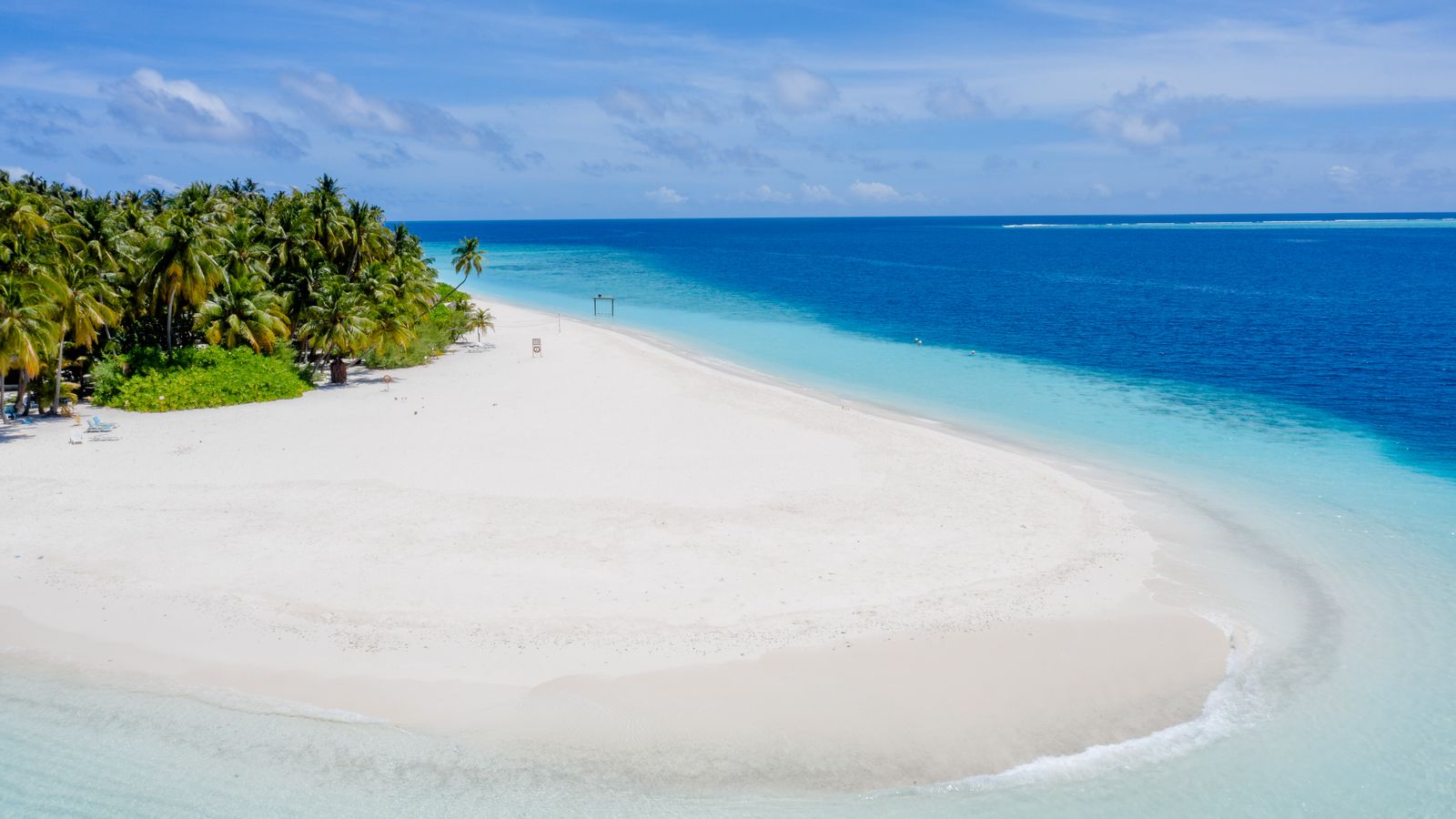
Most people picture the Maldives as private resort islands and overwater villas. Omadhoo shows you the other side: a small, inhabited local island in South Ari Atoll where guesthouses cost a fraction of resort rates, fishing boats still come and go from the harbour, and whale shark waters are a short boat ride away.
This guide covers how to get there by speedboat or public ferry, what you will really pay in 2026 once taxes are added, local-island etiquette, the best excursions, and when to go. Fuel costs pushed Maldives transfer prices up repeatedly in 2026, so confirm every price with your guesthouse before you book.
Omadhoo at a Glance
| Item | Details (checked October 2026) |
|---|---|
| Location | Alif Dhaal (South Ari) Atoll, about 74 km southwest of Male |
| Size and population | About 950 m by 300 m; 913 residents in the 2022 census |
| Shared speedboat | About 80 to 90 minutes; roughly US$45 to US$63 per person one way |
| Public ferry | Male to Mahibadhoo, then a local ferry; about 5 hours; MVR 53 reported |
| Guesthouses | Roughly US$50 to US$100 per room per night with breakfast |
| Green Tax | US$6 per person per night at small guesthouses on inhabited islands |
| Alcohol | Not available on the island |
| Best weather | December to April |
Where Is Omadhoo?
Omadhoo sits on the eastern side of Alif Dhaal Atoll, better known to travellers as South Ari Atoll. It lies close to Mahibadhoo, the atoll capital, and is roughly 74 km from Male. The island is tiny: under a kilometre long and about 300 m wide, so you can walk around it in well under an hour.
It is a working community of around 900 people, not a resort. That means a mosque, a school, small shops, a harbour, and daily life that runs on local rhythms. It also means local rules on dress and alcohol apply.
South Ari Atoll is famous for the South Ari Marine Protected Area (SAMPA), protected since 2009. The Maldives government describes it as a place where whale sharks can be seen throughout the year, along with turtles, manta rays and reef sharks.
How to Get to Omadhoo
Shared speedboat (most popular). Scheduled shared speedboats run from Male and the airport, typically twice daily. Recent operator timetables show departures from Male around 10:30 am and 4 pm (9:30 am and 4 pm on Fridays), and departures from Omadhoo around 7 am and 1 pm. The trip takes about 80 to 90 minutes, longer if the boat stops at other islands. Published fares in 2026 range from about US$45 to US$63 per person one way. One operator notes that fuel prices rose several times from March 2026 and that speedboat fares are changing often, so treat older prices as out of date. Your guesthouse will usually book seats and meet you at the jetty.
Public ferry (cheapest). The government-run MTCC ferry network makes Omadhoo possible on a tiny budget, but it takes most of a day and does not run daily. Published schedules show:
- Male to Mahibadhoo: 8:30 am, arriving about 12:40 pm, on Saturday, Monday and Wednesday.
- Mahibadhoo to Omadhoo: a local ferry at 1:30 pm, arriving about 1:45 pm (daily except Friday).
- Return: Omadhoo 9:55 am to Mahibadhoo, then Mahibadhoo to Male at 11 am, arriving about 3:20 pm, on Sunday, Tuesday and Thursday.
The combined fare has been reported at about MVR 53 per person. Schedules change, there is no Friday service, and weather can cancel sailings, so check the latest MTCC timetable and never plan a same-day international flight around a ferry.
Private speedboat or domestic flight. A private speedboat suits groups or late arrivals; guesthouses quote several hundred US dollars per boat. Omadhoo has no airport. Domestic flights serve Maamigili in South Ari, but most guesthouse guests simply take the shared speedboat.
If you are stitching together several islands or countries, my flashpacker travel logistics hub covers buffer days and backup plans for this kind of boat-dependent trip.
Entry Basics
The Maldives issues a free tourist visa on arrival, generally for up to 30 days, according to Maldives Immigration. You need a valid passport, an onward or return ticket, a confirmed accommodation booking and enough funds. All arriving and departing passengers must also submit the free IMUGA Traveller Declaration online within 96 hours of travel. Check the official immigration site for nationality-specific rules before you fly.
Where to Stay and What It Really Costs
Omadhoo has a handful of small guesthouses rather than resorts. Most offer air-conditioned rooms with private bathrooms, breakfast, and add-on meal plans and excursions. Recent listings and traveller reports put a double room at roughly US$50 to US$100 per night, often including breakfast.
The key thing is to check whether the quoted rate includes taxes:
- Green Tax: US$6 per person per night at tourist guesthouses on inhabited islands with 50 or fewer rooms, per the Maldives Inland Revenue Authority (MIRA). It doubled from US$3 on January 1, 2025. Children under two are exempt.
- Tourism GST (TGST): 17% since July 1, 2025.
- Service charge: many guesthouses add 10%.
- Departure tax: foreign economy passengers pay US$50 departure tax plus a US$50 airport development fee, normally built into your airline ticket.
So a room advertised at US$60 can land noticeably higher once tax, service and Green Tax for two are added. Ask for an all-in price.
Local Island Etiquette
- Dress: cover shoulders and knees in the village. Swimwear is fine on the designated bikini beach and on boat trips.
- Bikini beach: Omadhoo has a small designated tourist beach where you can swim and sunbathe in regular swimwear. On other beaches, swim in shorts and a T-shirt or a rash guard.
- Alcohol: none on the island, and you cannot bring it in through customs. Some excursions visit resorts where drinks are sold.
- Prayer times and Fridays: some shops close briefly for prayers, and Friday is the main day of rest.
A rash guard does triple duty here: modesty on public beaches, sun protection, and a little relief when the equatorial heat and your own internal thermostat decide to team up.
Things to Do on Omadhoo
Swim with Whale Sharks
This is the headline. Whale shark trips from Omadhoo head to the southern edge of the atoll inside SAMPA, where sightings are possible year-round but never guaranteed. Reported prices vary widely by guesthouse, from roughly US$120 to US$200 per person, so compare before you commit.
SAMPA rules require swimmers to stay at least 3 m from a whale shark’s head or body and 4 m from its tail, never touch or ride it, and never block its path. Boats must stay at least 15 m away and keep 25 m from other vessels. Flash photography and feeding are not allowed. A good operator will brief you on this before you get in the water.
Manta Rays
South Ari also has manta cleaning stations, and some travel sources say numbers increase during the southwest monsoon, roughly May to October. If mantas are your top priority, compare Omadhoo with Dharavandhoo in Baa Atoll, the local island next to Hanifaru Bay.
House Reef Snorkelling
You can snorkel straight from the beach near the bikini beach area. Expect reef fish and sometimes stingrays and small reef sharks. Wear reef-safe sunscreen and fins rather than standing on coral.
Sandbanks, Picnic Islands and Dolphins
Guesthouses run half-day and full-day trips to sandbanks and uninhabited picnic islands, plus dolphin cruises and combo snorkel trips. Prices vary a lot, so ask what is included, such as lunch, snorkel gear and park fees.
Diving
The atoll has well-known dive sites with sharks, turtles and big schools of fish. A few guesthouses partner with dive centres; bring your certification card and check that the centre is licensed.
Sunset Fishing
Fishing is central to Maldivian life, and many guesthouses offer traditional line-fishing trips at dusk. Your catch may end up on the dinner table.
Food on Omadhoo
Food is simple and fish-forward. Look for mas huni, a breakfast of tuna, coconut and onion eaten with flatbread, plus fish curry, garudhiya (fish broth) and short eats, the small snacks served in local cafes. Most visitors eat at their guesthouse, though there are a few small cafes. Fresh coconuts and juices replace cocktails.
Best Time to Visit Omadhoo
- December to April (northeast monsoon): the driest, sunniest weather and calmer seas. This is peak season, so book guesthouses early.
- May to November (southwest monsoon): more rain and wind, with rougher crossings, but often lower prices. Some sources say manta encounters improve in these months.
- Whale sharks: present year-round in SAMPA, though sea conditions affect trips.
Ramadan dates shift each year; services continue, but cafes may have reduced daytime hours.
Suggested 4-Day Itinerary
- Day 1: Shared speedboat from Male, check in, and watch sunset from the bikini beach.
- Day 2: Whale shark trip in the morning, house reef in the afternoon.
- Day 3: Sandbank or picnic island trip, then sunset fishing.
- Day 4: Slow morning, then the early or midday speedboat back to Male.
Add a buffer day before an international flight if you are using the public ferry.
More Island and Wildlife Guides
Many travellers pair the Maldives with Sri Lanka, which is a short flight away. If you do, my guide to Bundala National Park covers one of the island’s best birding and wildlife parks. For another island-hopping country with great snorkelling, see my Indonesia guide.
FAQs
How do I get from Male to Omadhoo?
Most travellers take the shared speedboat, about 80 to 90 minutes and roughly US$45 to US$63 one way in 2026. The public ferry via Mahibadhoo is far cheaper but takes most of a day and runs only on set days.
Is Omadhoo good for budget travellers?
Yes, by Maldives standards. Guesthouses are far cheaper than resorts, but add Green Tax, 17% TGST and any service charge, and budget for excursions, which are the real expense.
Can I drink alcohol on Omadhoo?
No. Alcohol is not available on local islands. Some excursions visit resorts where you can buy drinks.
Can I see whale sharks year-round?
Whale sharks are seen in South Ari throughout the year, but sightings are never guaranteed and trips depend on sea conditions.
